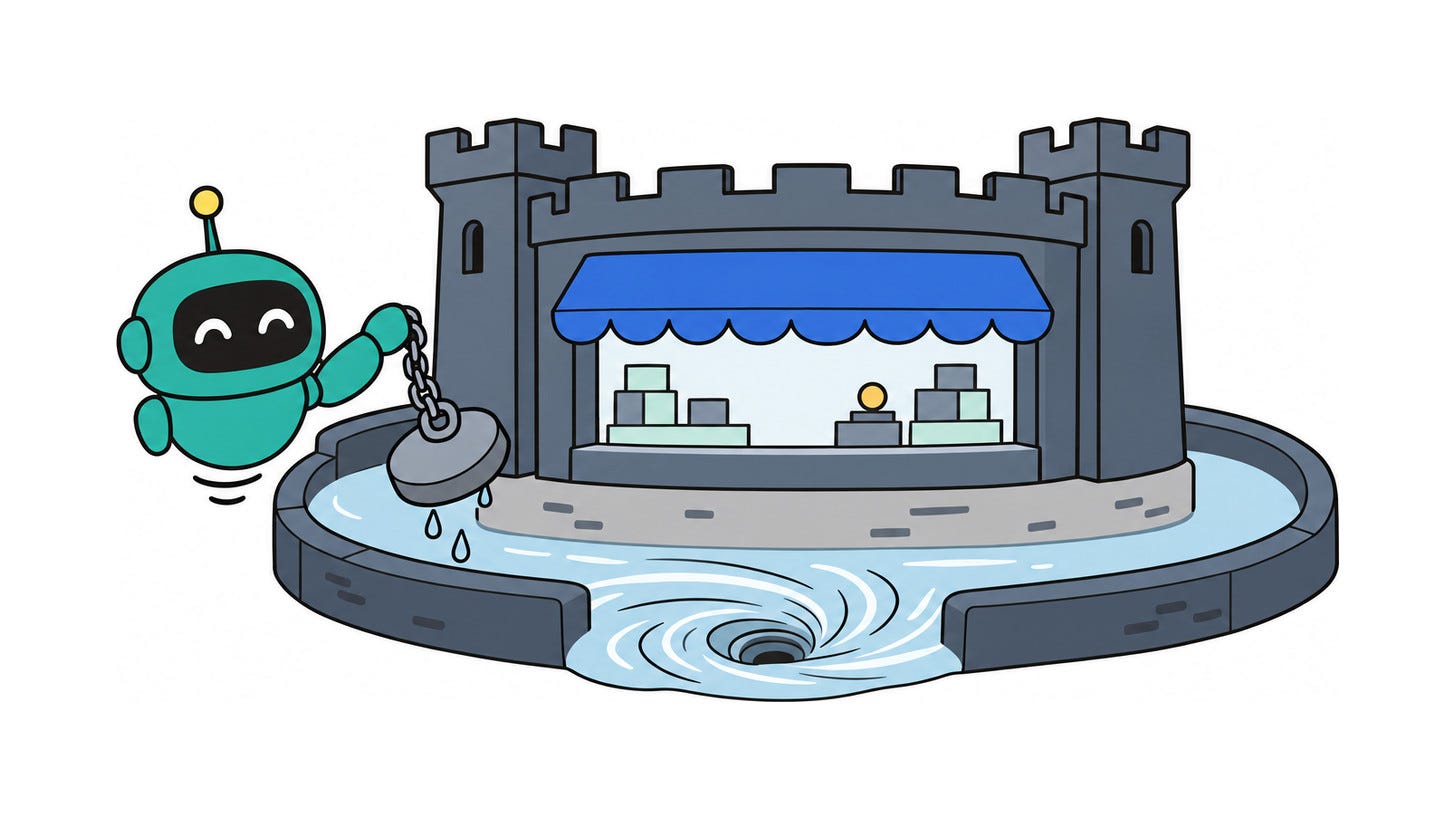
Suppose I want to rent a house in Santa Cruz for a long weekend with seven friends. I open Airbnb because that is where the houses are. The owners list there because that is where people like me look.
That reinforcing feedback loop is the foundation of a two-sided marketplace. More supply attracts more demand; more demand attracts more supply. Building it takes years. Once established, it is difficult to challenge. If I launch JasperBnB tomorrow, no one visits because there are no houses, and no one lists because there are no visitors. It is the classic cold-start problem.
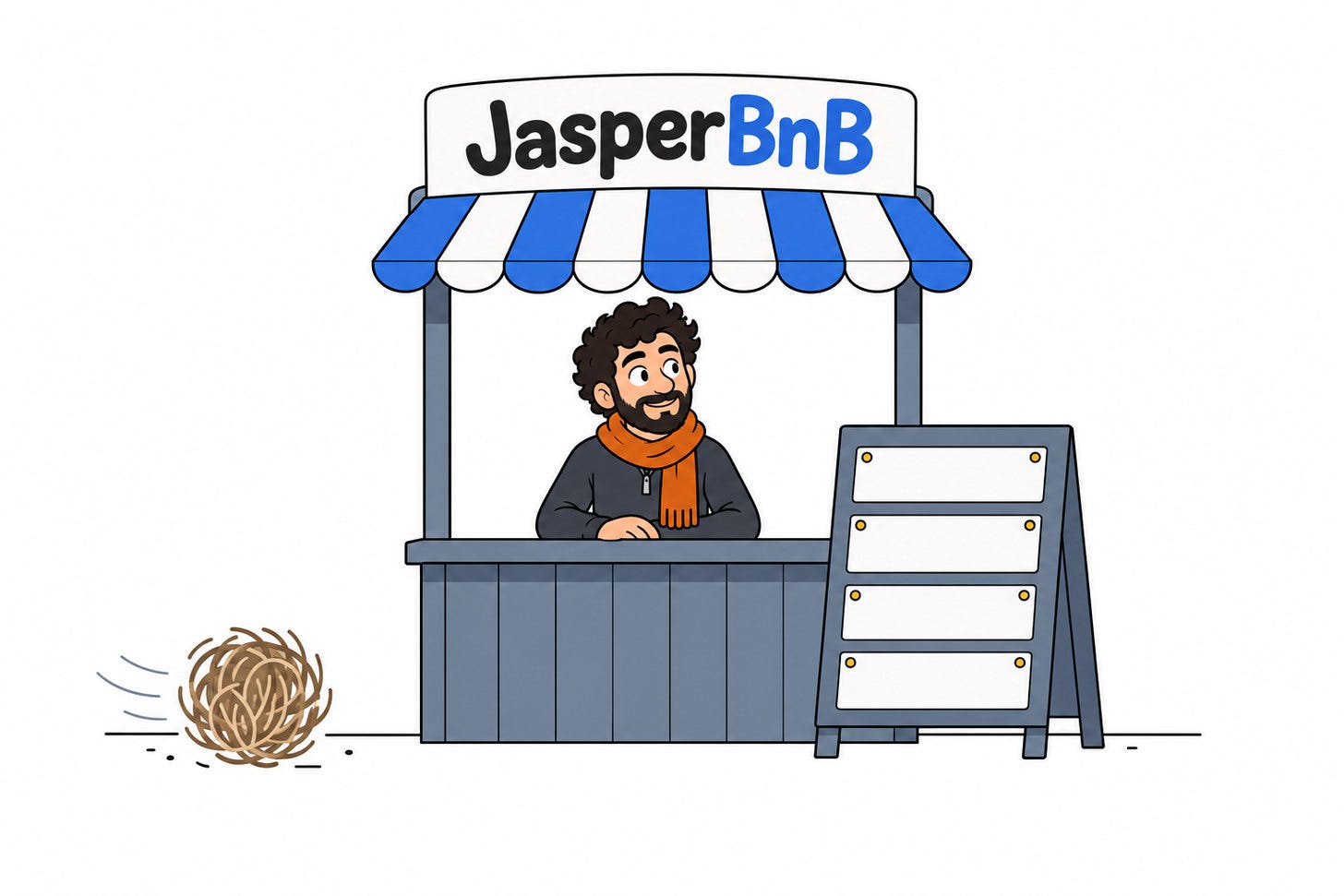
But what happens when the effort required to find, compare, and book across marketplaces approaches zero?
Some of what we call network-effect moats may actually just be advantages sustained by high search costs. Sure, marketplaces do more than gather buyers and sellers: they structure information, establish common policies, and make transactions easier. Historically, capturing these benefits has meant bringing everyone onto the same platform. When I need a house, I check Airbnb and perhaps Vrbo. I could search ten other sites, but comparing unfamiliar listings, calculating fees, and managing separate accounts takes time.
The value of a large network and the value of controlling access to it are not the same thing. Agentic commerce could preserve the former while undermining the latter. The gatekeepers of buyer and seller networks (i.e., incumbent marketplaces) may find they no longer have special access worth paying for.
Imagine giving an agent a straightforward request: I’d like to stay three nights in Santa Cruz, eight people, no more than $200 per person per night including fees. Walking distance to the beach would be nice.

The agent could search major platforms, local property managers, and independent booking sites I have never heard of. It could compare availability, sleeping arrangements, cancellation terms, and total prices, and book within limits I authorize.
Sure, finding more houses is only useful if the agent can compare them. Airbnb has spent years standardizing listings, photographs, and policies. But AI excels at interpreting unstructured information. Agents can compare properties across different formats without requiring everyone to adopt the same standards.
At the same time, a homeowner’s agent could quickly list the property across platforms, even if they have different data standards. As both sides become less dependent on individual platforms, marketplaces could become increasingly interchangeable, competing on price rather than captive audiences.
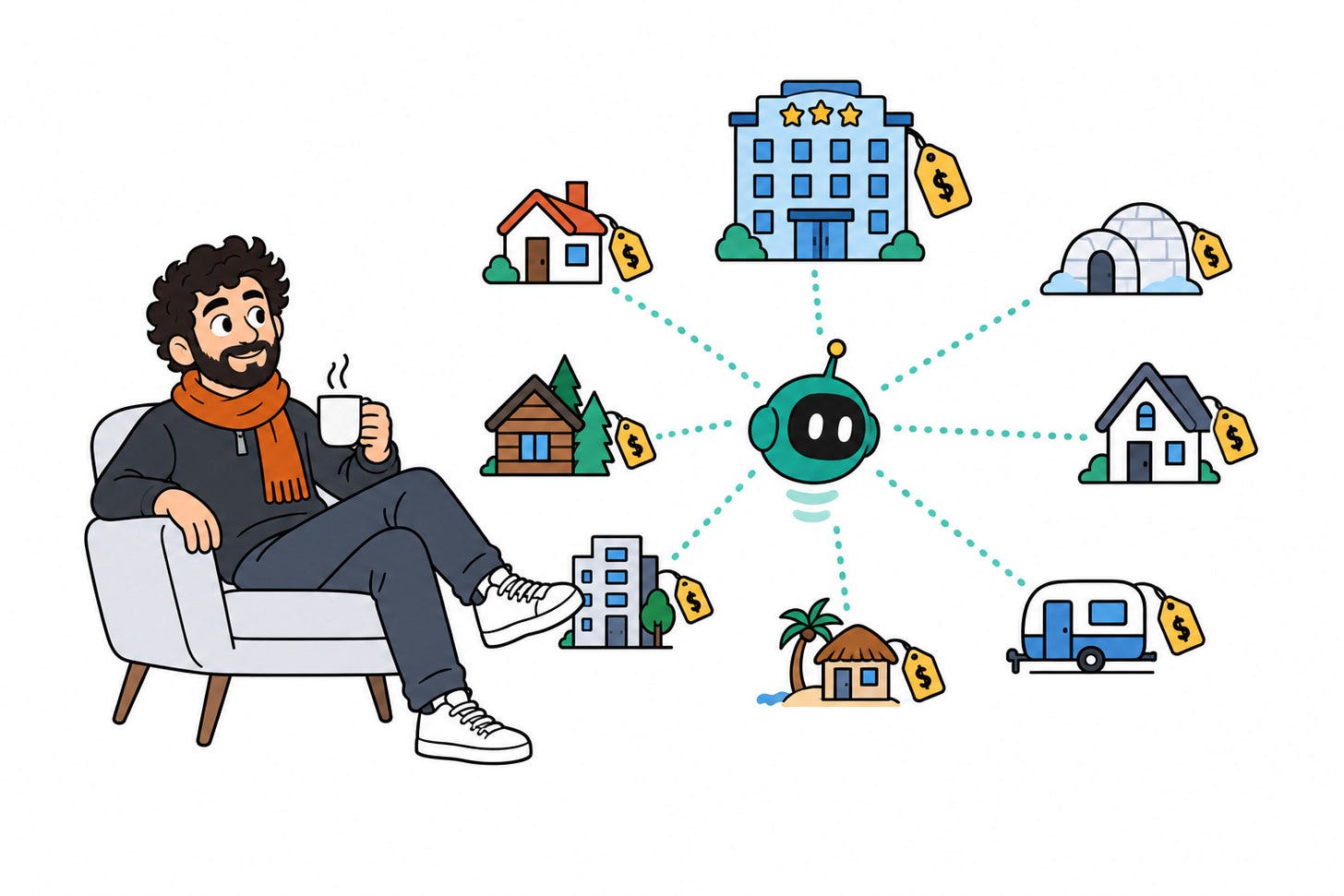
In that world, JasperBnB would no longer need to become a household name before winning business. Rather than building a large audience of its own, it could compete as one of many interchangeable listing services as long as agents can find it.
Incumbents may resist agents that threaten their control over transactions. In September 2026, Amazon blocked Meta’s Muse shopping agent, illustrating how dominant platforms might defend their distribution advantages. Ironically, such restrictions could create opportunities for competitors. Shopify, for example, has taken the opposite approach, partnering with Meta to facilitate purchases through its merchants. Smaller suppliers have an incentive to embrace agents precisely because they lack the distribution advantages of incumbents.
If agents can generate business at lower cost, alternative distribution networks could emerge without incumbent cooperation.
Can reputation travel?
The strongest objection to this vision is trust. Airbnb is more than a collection of listings. It verifies identities, maintains reviews, and provides guest protections.
Even if agents can find better products or prices, that value is less compelling if they can’t trust they’ll be supported if things go wrong (see Airbnb’s guest protections).
Reputation could become a stronger moat than distribution, but perhaps an easier one to cross. A new marketplace doesn’t need millions of reviews; it needs credible evidence about a particular seller.
Agents could carry verifiable records of past transactions, fulfilled commitments, and resolved disputes: a reputational fingerprint. If credibility becomes portable across platforms, buyers and sellers would no longer need to rebuild their reputations with each new intermediary or protocol.
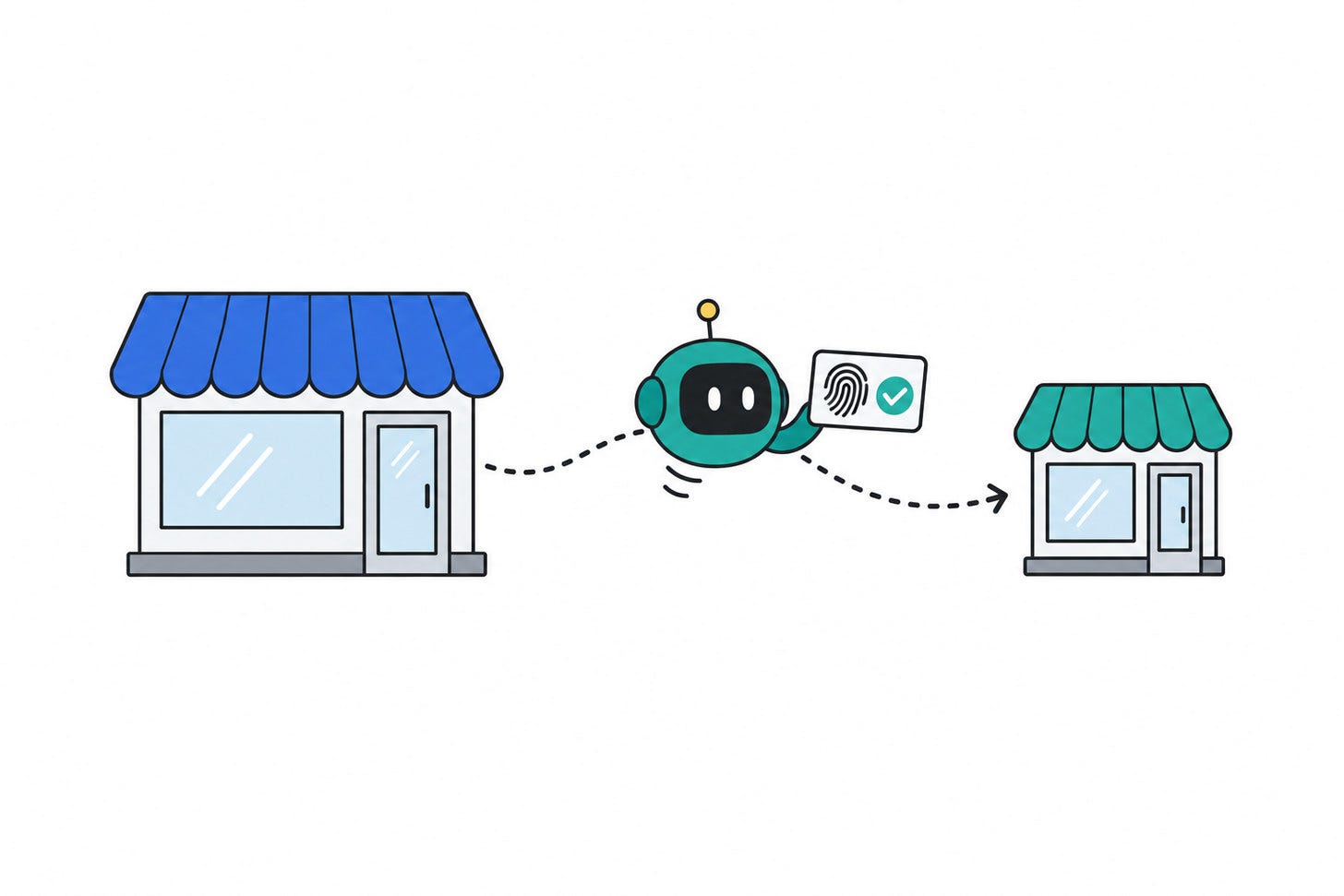
Identity alone would not prove reliability as a verified homeowner can still misrepresent a house. Portable reputation would need safeguards against fabrication, selective disclosure, and abandoning a bad history.
What remains worth paying for?
If marketplaces become increasingly interchangeable, a more radical possibility emerges: open protocols could replace centralized listing platforms altogether. A homeowner could publish availability once, allow agents to discover it, and purchase payment processing, protection, or dispute resolution separately.
Marketplaces might earn less from matchmaking and more from verification, protection, and dispute resolution.
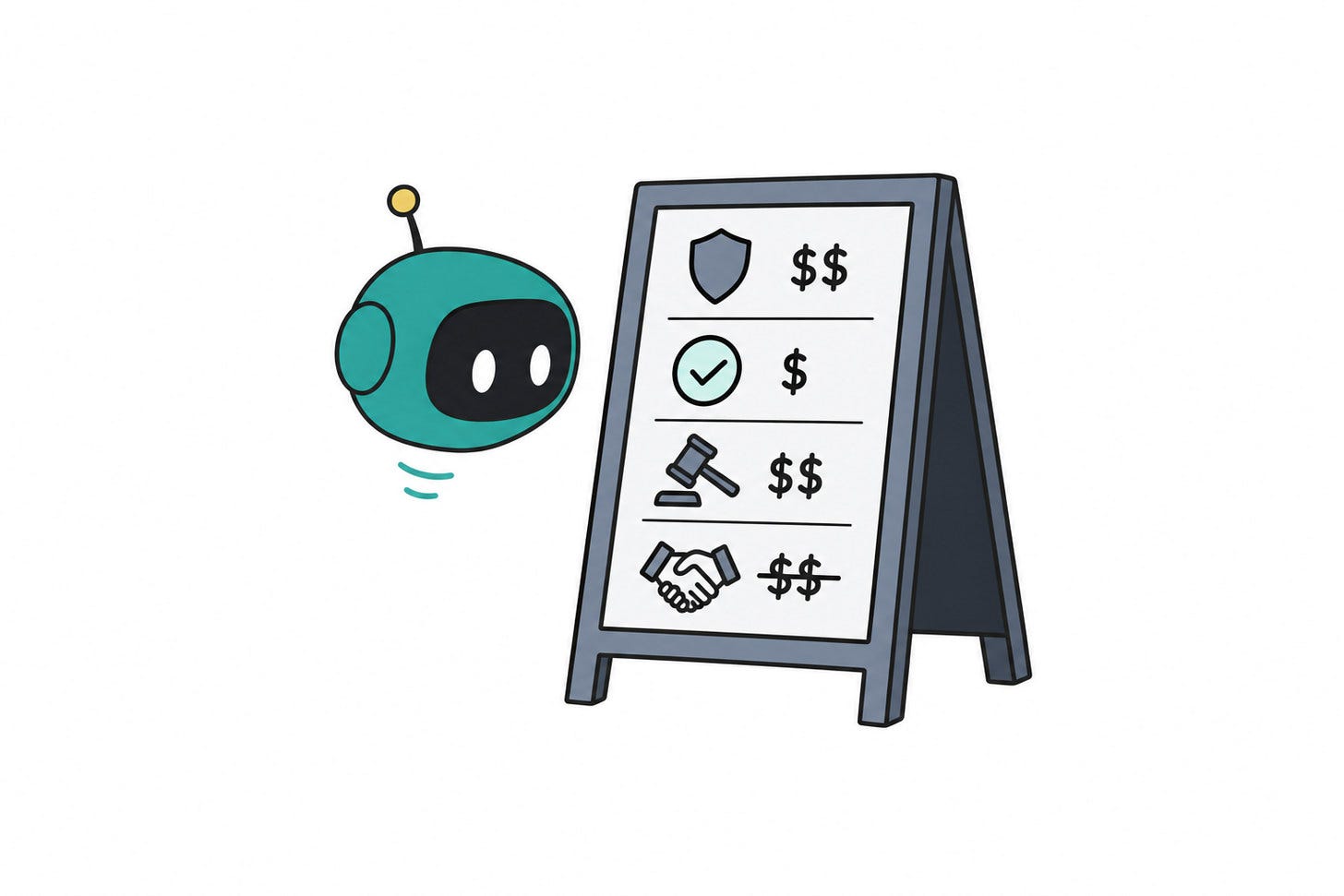
If most buyers delegate purchases to a few assistants, those providers could become the new gatekeepers. The Amazon–Meta dispute illustrates the emerging contest over who controls the customer relationship: the marketplace or the agent. Lower search costs might not eliminate intermediary power, but would shift it to whoever makes or controls the agent.
What would prove the thesis?
I would look for three changes as agentic commerce matures.
First, independent sellers would gain customers through agents. They wouldn’t need to build their own brands or large audiences first.
Second, buyers and sellers would share reputational credentials across services. This would lower the penalty for leaving an incumbent.
Third, discovery and matching fees would decrease. Charges would focus more on real services like verification, protection, and recourse.
If agents only automate bookings on major platforms, convenience will improve. If they help new suppliers be seen and trusted, the market structure might change.
Can a marketplace still charge for gathering everyone in one place when agents can be everywhere at once?