


Recap: Right now we are exploring which way is up on the moral landscape (what separates a moral peak from a valley) so that we can later learn to navigate it.
In the last essay, we adopted the premise that experiential valence—how positive or negative it feels—is what makes one experience better or worse than another. We found that experience and valence can start externally, as a reaction to what the senses bring in. Evolution charged raw, sensory signals: warmth, good; a hot stove, bad.
In this essay, we turn inward to the mind on its own, and explore how a feeling that starts in the mind, from a memory, an idea, or an imagined future, carries valence just the same as one that starts in the senses.
Alone In Your Head
It is three in the morning. The room is dark and quiet, and nothing is touching you but the sheets. Yet you are wide awake, replaying something you said wrong at dinner. You feel anxious.
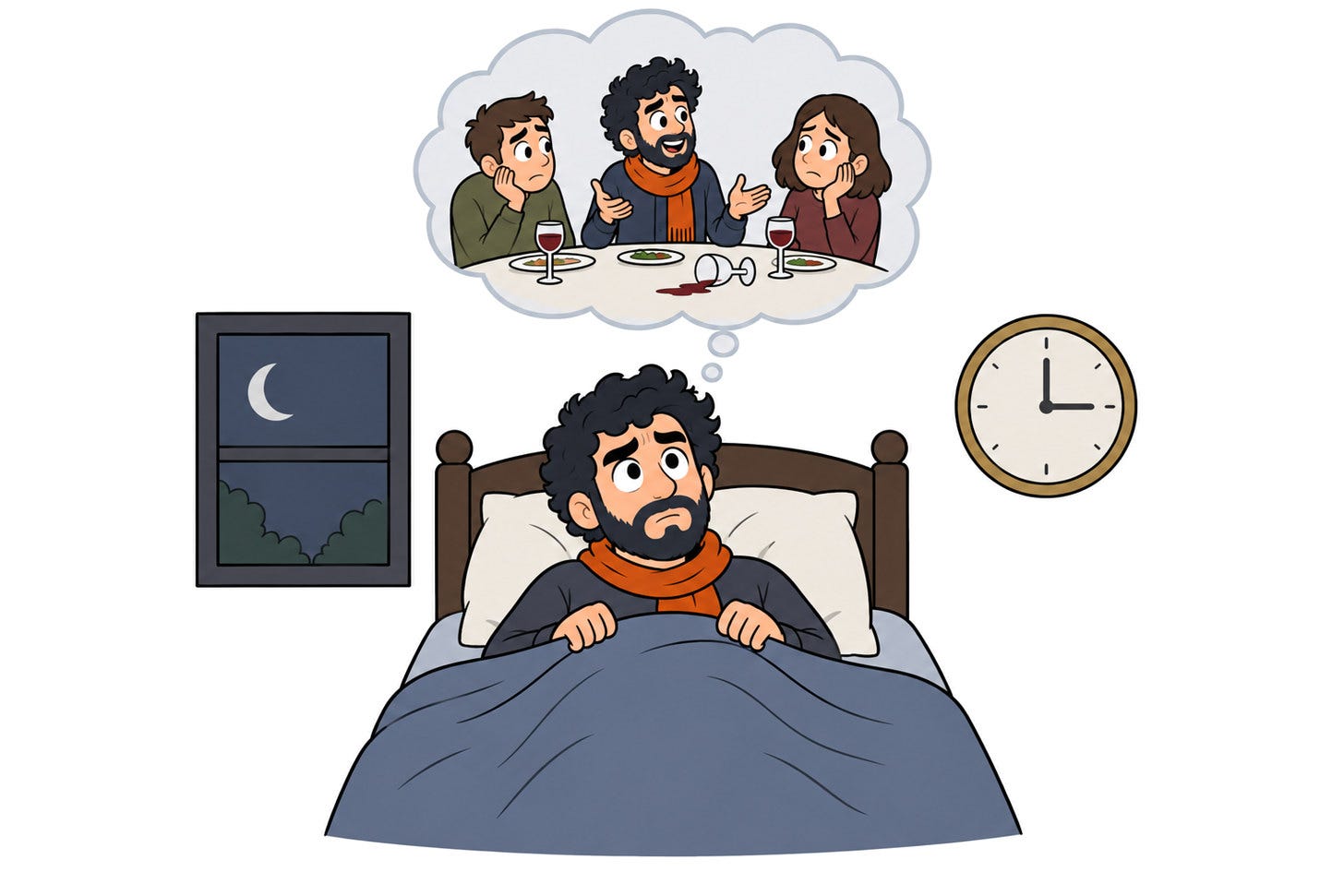
What you heard and saw at dinner may have led you to say this regrettable thing. But the angst keeping you awake now is purely internal. The quiet cricketing of the night is not causing this discomfort: it is just helplessly arising within your consciousness.
The last essay followed feelings that start in the senses. Senses deliver the objective world into the subjective one. Your body is an interface to your mind.
Yet much of what moves us starts somewhere else: a memory, a worry, or an idea. These are purely subjective, arising independently of the world pressing upon you.
How much of an ordinary day do we spend in our heads? In 2010, two Harvard psychologists built a phone app that asked people, at moments throughout their day, what they were doing, what they were thinking about, and how they felt. People were thinking about something other than what was happening almost as often as about what was. And they were usually less happy when their minds wandered than when they did not.1
We sometimes wave these feelings off. “It is all in your head,” we say, as if that made it count for less. Does it though?
A Valley Is a Valley
An experience need not start in the senses to have valence and thus shape the landscape of well-being.
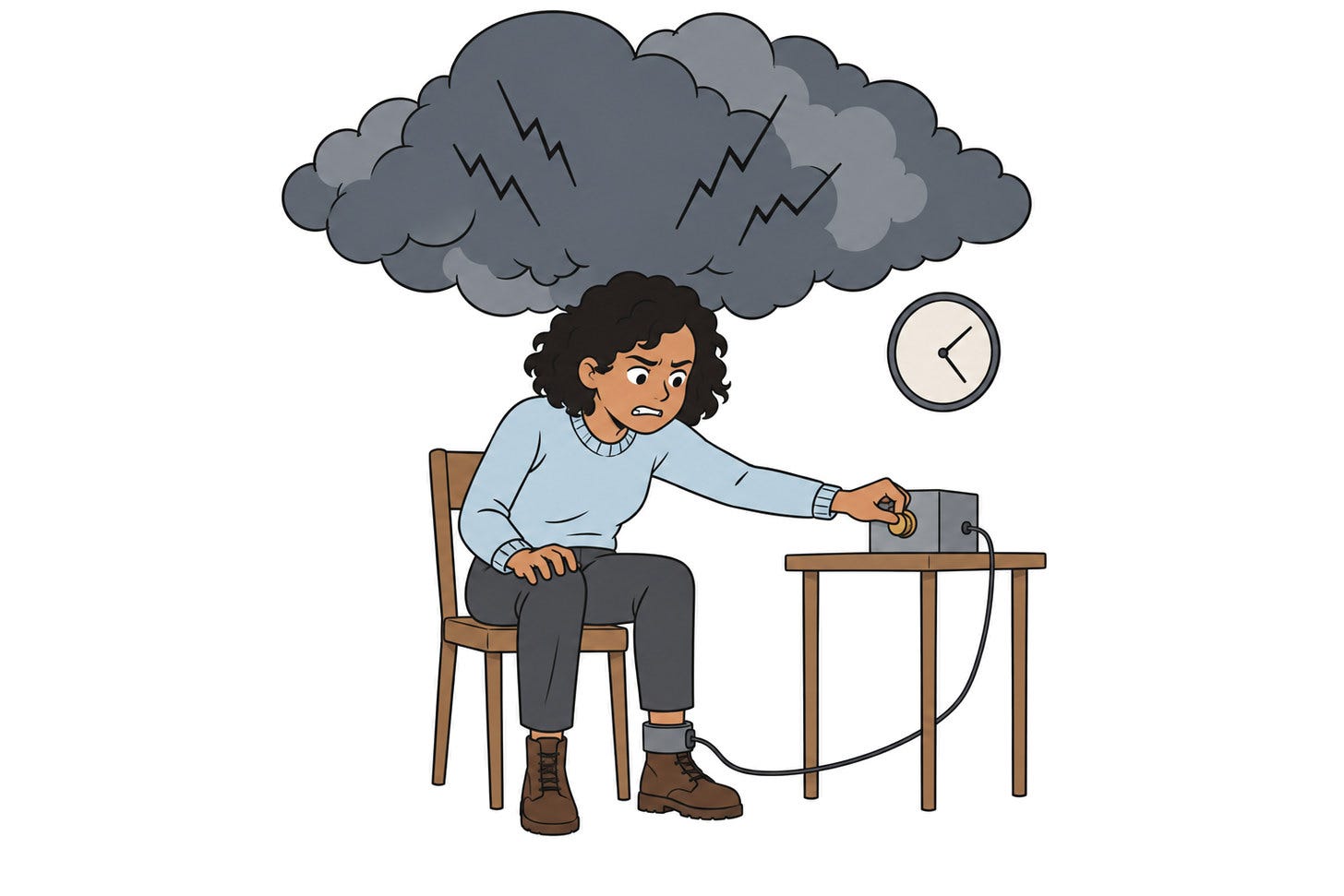
Negative thoughts in the mind can sometimes outweigh physical pain. In 2006, neuroscientists at Emory University made volunteers wait for an electric shock. Given a choice, nine of the thirty-two took a stronger shock sooner over a weaker one later.2 They preferred extra physical pain to a feeling (of dread? of anxiety?) that existed only in their heads.
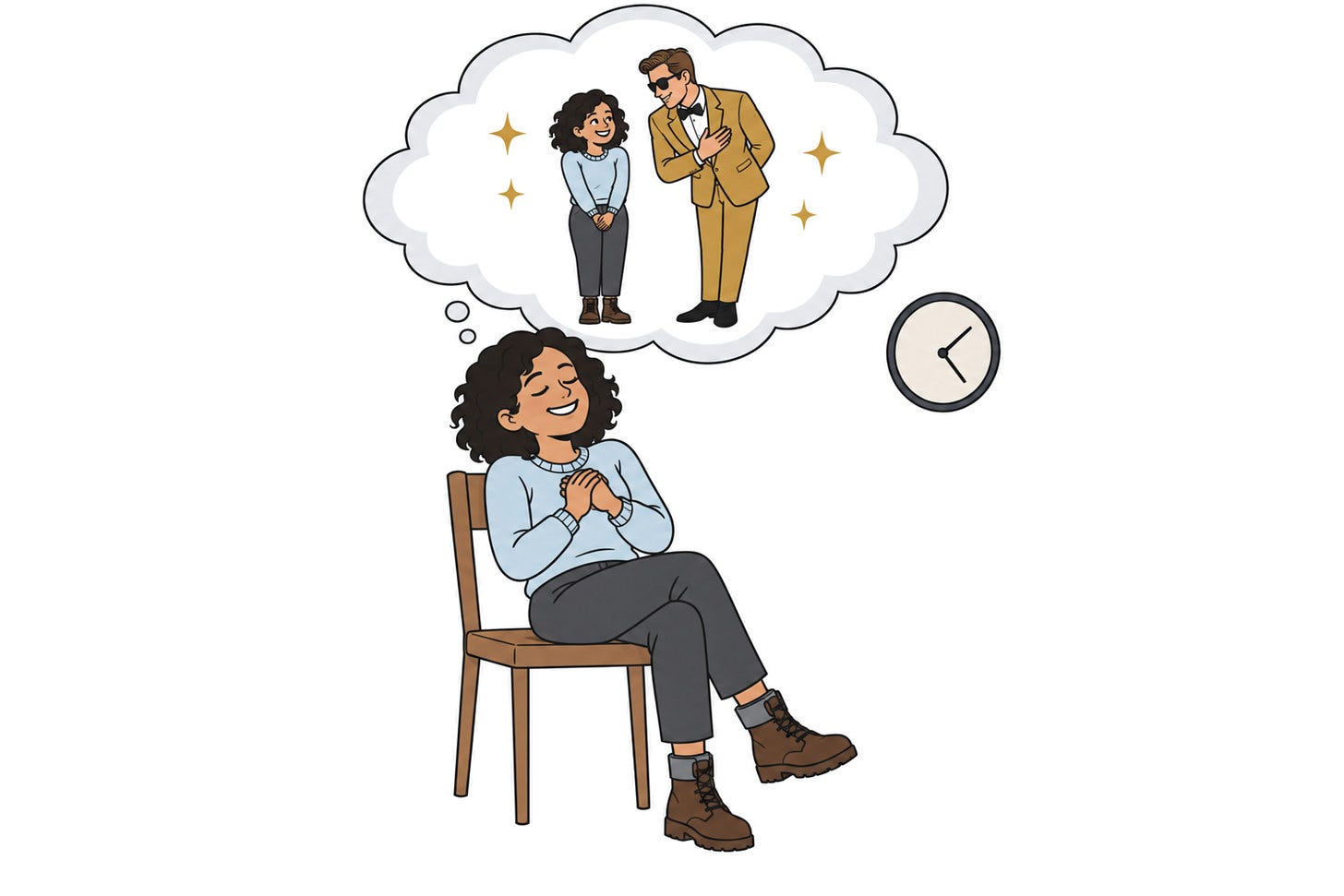
The reverse can also be true. In 1987, the economist George Loewenstein asked thirty undergraduates what they would pay for a kiss from the movie star of their choice, delivered at different times. On average, they would pay more for a kiss three days away than for one right now.3 The extra value was in three days of looking forward to the moment: a pleasure wholly of the mind.
Even a pleasure tied to something outside, like a kiss from a movie star, may take most of its charge from the mind: the feeling of being adored, or the thrill of being a star’s equal, more than the kiss itself.
Some disagree. In 1884, William James argued that standard emotions are the feelings of the body’s changes: we are afraid because we tremble, not the other way around.4 Maybe. At three in the morning your heart is loud and your chest is tight, but those seem to be bodily reactions to internal stimuli rather than external ones. A thought arose, and the body reacted. The body may be how such a feeling is felt, but it is not where it starts.
Some feelings arise even when the body is experientially gone. Sam Harris (whose moral landscape metaphor this series borrows) describes, in his book Waking Up, periods in which all thought fell away and even the sense of having a body disappeared, leaving “a blissful expanse of conscious peace” tied to none of the usual senses.5 Many spiritual or psychedelic moments of ecstasy can be experienced without apparent input from the body at all.
Note: Those who have not spent time in deep meditation or psychedelics may consider this loss-of-body experience to be almost nonsensical, having never experienced it before themselves. Please trust that such experiences are on offer to those who seek them.
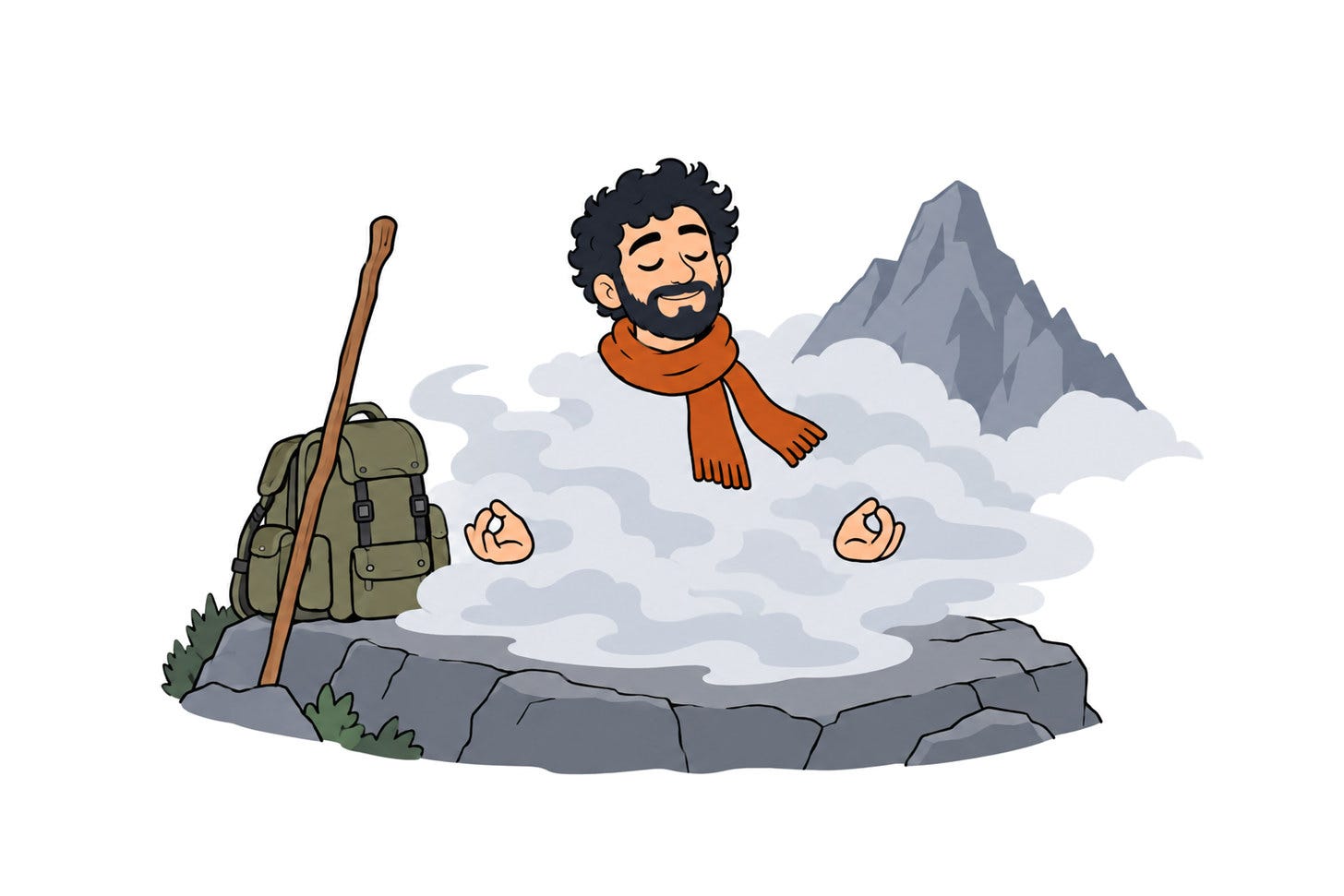
Our experience (and its valence) can start in our minds. It can be referent to the external, objective world (through the senses), or it can arise from the internal, subjective one. Where a feeling started is separate from how it feels. A feeling that starts in the mind carries valence as fully as one that starts in the senses, and it shapes your landscape of well-being just as much. A valley is a valley.
Things No Sense Can Touch
Harris’s bliss had no object. Most strong feelings do, and some of the strongest are about conceptual, non-sensory things. A sight or a sound may call them up, but the charge comes from the idea. My political party, good; their party, bad. My religion, true; theirs, dangerous.
Several people close to me are committed anti-industrialists and naturalists. Space is where we split the hardest. To them, outer space is sacred, and colonizing it is among the worst things we could do. They view it as an unhinged focusing on something “out there” instead of focusing on healing our Earth and working on ourselves “in here.” This topic weighs on them powerfully.
I see it the other way. To me, outer space is a frontier. I’m excited about SpaceX, about building on the moon, about people one day living on other planets. Nothing matters until someone feels, and to me colonizing space is a way to both (1) spread consciousness and (2) hedge the risk of existential loss of consciousness on Earth. (Whether more conscious lives make a better world is a question for a later essay.)
All our senses give us of outer space is blackness with points of light; we neither hear nor feel it. No sense told them outer space is sacred, and no sense told me it was a frontier. Yet our feelings can run hot.
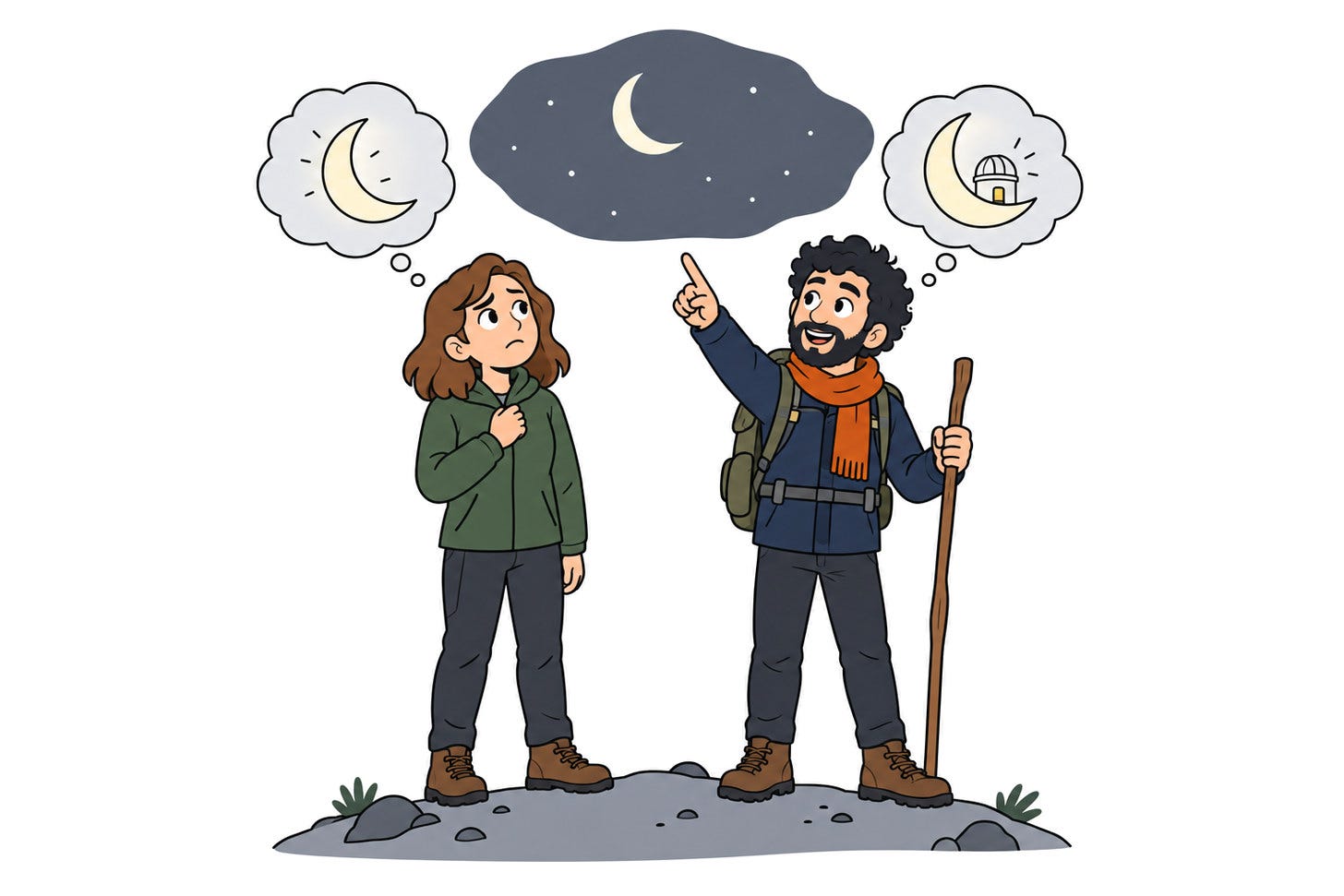
Both feelings are real, and both count in the lives of the people who feel them. Should society seek to build a colony on the moon, they will feel frustrated, and I will feel inspired.
That raises a hard problem. If one of those friends is disgusted by what I value, how should that count? My values shape my landscape of well-being, and their values shape theirs. How their disgust should weigh in the moral landscape, where their landscape aggregates with mine, is a question for later essays: Good for Whom? asks whose well-being counts, and Your Happiness or Mine? asks how to add it up.
A Bigger Landscape
Does a feeling have to start in the senses to count? No. Three claims to carry forward:
Experiential valence can be derived subjectively—much of what moves us starts internally in the mind separate from input from the external world.
A feeling that starts in the mind carries valence as fully as one that starts in the senses, so it shapes your landscape of well-being just as much.
Some of the strongest feelings attach to ideas no sense can touch, such as a party, a faith, or a frontier, and they count in the lives of the people who feel them.
Together with the last two essays, we know that the moral landscape forms from experiential value in the subjective world, and that those valences can be colored by both external forces (through the senses) and internal ones.
If feelings are all that count, would the best life on offer be to take pleasure pills? What does it actually mean to have a positive valence in subjective experience? In the last essay, I described a night in hell in the Peruvian Amazon. But I left it largely grateful. Why be grateful for a night like that?
In the next essay, I Want Sin, I argue that a good life is not the same as a pleasant one.
Matthew A. Killingsworth and Daniel T. Gilbert, “A Wandering Mind Is an Unhappy Mind,” Science 330, no. 6006 (2010): 932.
Gregory S. Berns et al., “Neurobiological Substrates of Dread,” Science 312, no. 5774 (2006): 754–58.
George Loewenstein, “Anticipation and the Valuation of Delayed Consumption,” Economic Journal 97, no. 387 (1987): 666–84.
William James, “What Is an Emotion?” Mind 9, no. 34 (1884): 188–205.
Sam Harris, Waking Up: A Guide to Spirituality Without Religion (New York: Simon & Schuster, 2014). The landscape metaphor comes from his earlier book, The Moral Landscape (2010).