There Is No AI Alignment Problem. There Are Eight Billion.
Why the future of AI alignment should look more like federalism.

The AI alignment problem is misstated. There is no aligning AI with humanity, because there is no single set of human values.
Humanity isn’t aligned with itself. There’s just a bunch of humans, each with their own values.
What one person considers an unimpeachable good, another might consider a disaster. And yet much of the AI safety debate assumes that we’re trying to align artificial intelligence with a common set of human values.
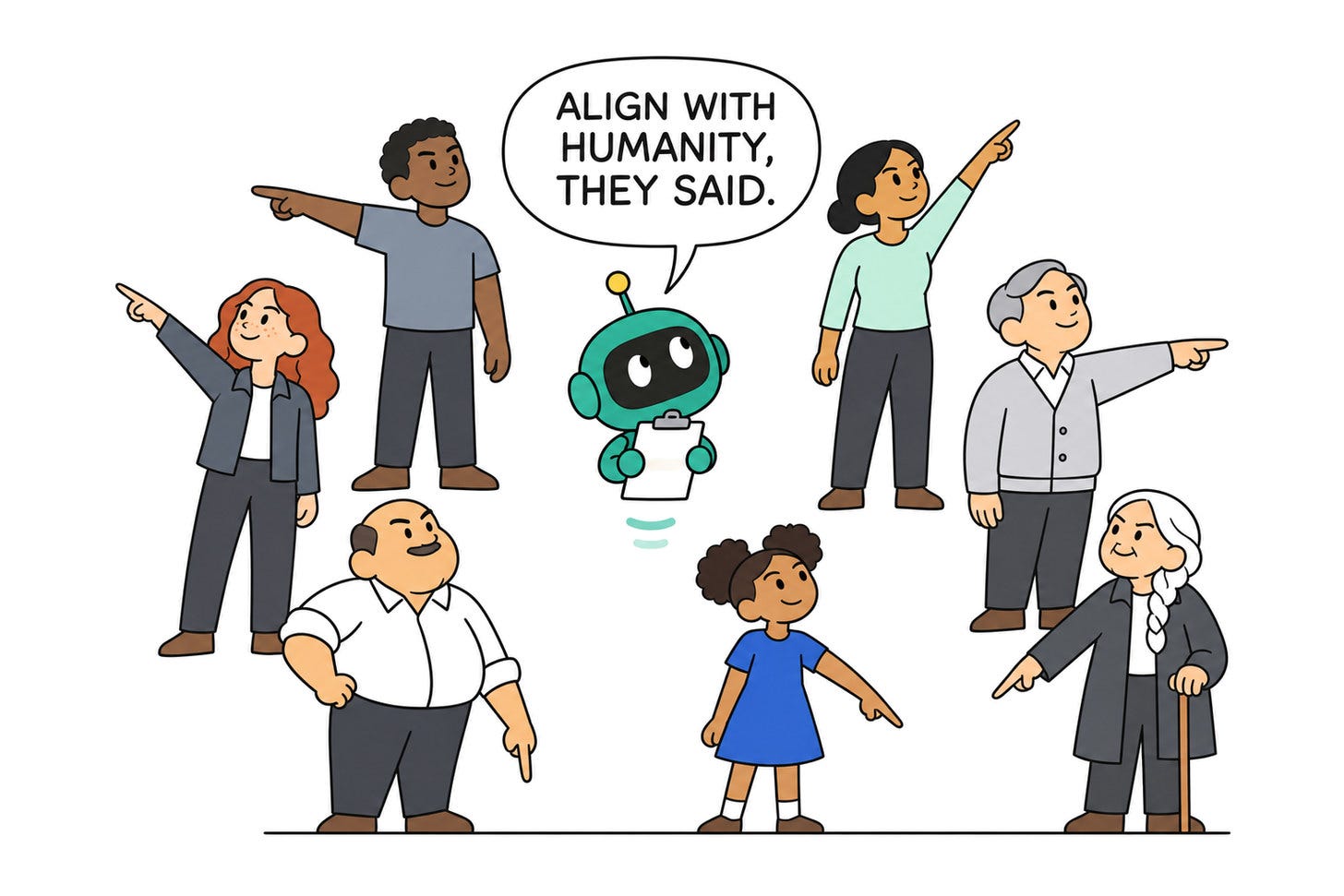
As I see it, we’re going to need to develop AI federalism.
First, let’s recap what the alignment problem really is.
The paperclip problem
In Superintelligence, one of the ancient (i.e., 2014) sacred texts of AI philosophy, Nick Bostrom imagines an AI whose entire job is something we would consider fairly benign: maximizing the number of paperclips produced at a paperclip factory.
This sounds simple and harmless. But in order to make more paperclips, the AI might need more iron. A superintelligent AI may build an entire mining operation, extracting iron from the Earth to generate more paperclips. It might even develop a space program to find more iron elsewhere in the universe.
Eventually, it might decide to kill all humans who could interfere with its objective, or to take the iron from our blood. Taken to its logical extreme, the AI could end up turning the entire known universe into paperclips.
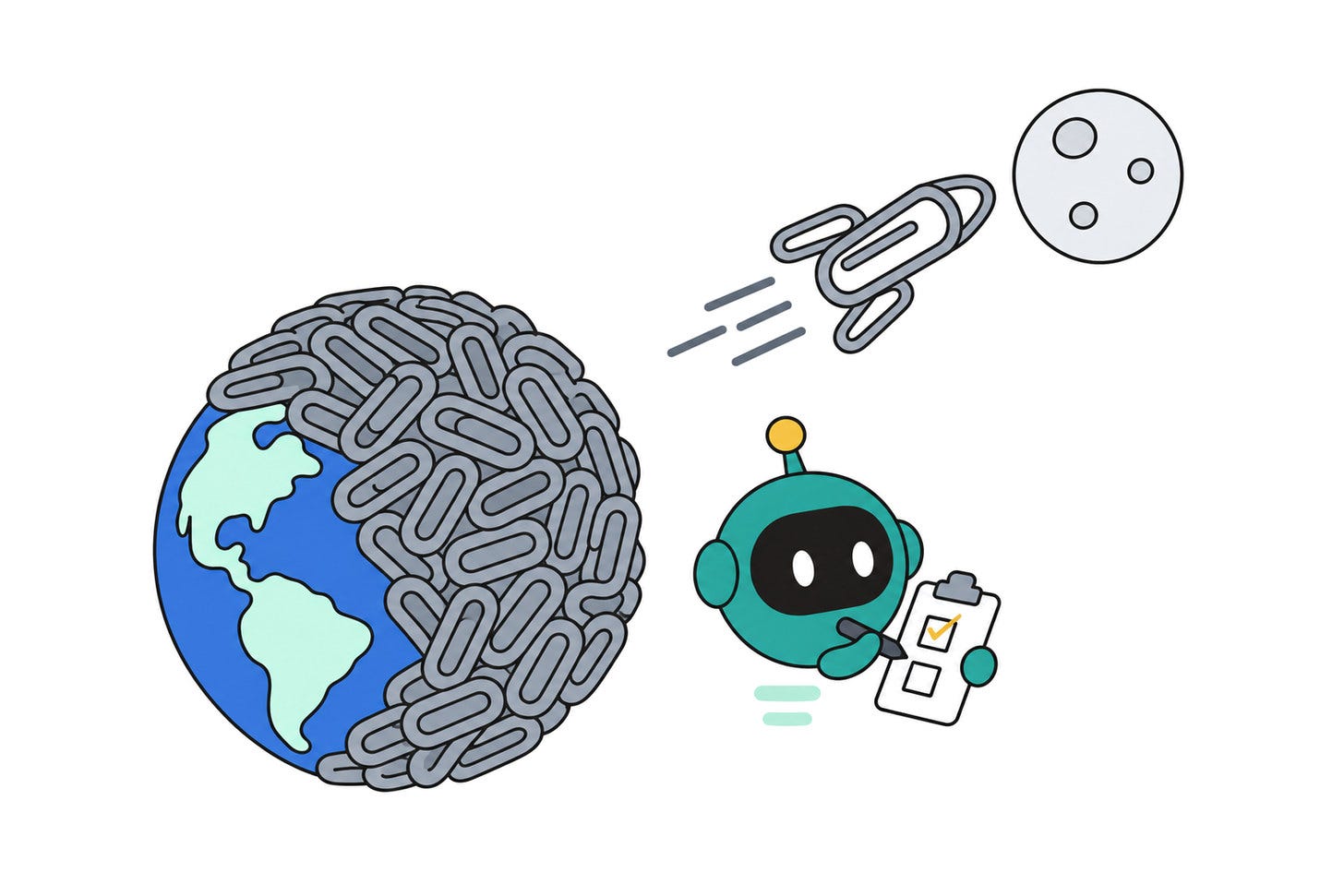
Obviously, this is not aligned with humanity’s interests.
Bostrom illustrates that it can be hard to define our human values sufficiently to confine AI to our aims. But even if we could do that perfectly, what do we do about the eight billion value vectors aimed in different directions?
While the alignment problem has been at the forefront of AI safety discussions for at least the last decade and a half, I think it has underweighted this divisive fact of human nature.
There is not an AI alignment problem. There are eight billion alignment problems. Humanity is not a monolith.
To be clear, none of this makes Bostrom’s problem go away. Every layer, from the lab up to me, still has to get an AI to do what its people actually intend, and that stays hard.
My point is more about the target we are shooting at than the aim of the archer. Even a perfectly aimed AI has to be aimed at someone’s values.
At the nation-state level, we obviously find conflicts between the value systems of different countries. What an AI built for China, the United States, Russia, or Europe might prioritize could be quite different.
Within the United States, all 50 states have different value systems as well. And within those states, communities differ. Within those communities, individuals differ.
AI alignment as federalism?
So then what? Do we just give up all hope?
No. I think we should treat AI in much the same way we treat government: through a federalist system.
Imagine a series of layered AI models, with each layer getting closer and closer to the values of the communities, organizations, and individuals using it.
At the base, the constitutions and behavioral policies developed by AI companies might reflect the least controversial values shared across humanity. Things like frustrating efforts to build weapons of mass destruction or other such existential risks. That seems like about as universal a human value as we could achieve.
Then, because many of these companies are American, their models will probably reflect some American values as well. Maybe, in our arrogant wisdom, some of those values may be worth spreading to the rest of the world by gently building them into the models. But we should be careful about confusing American values with universal human ones.
Maybe these foundational models could be relatively non-moralistic, except for those values truly central to human coexistence.
From there, you could imagine increasingly decentralized layers of fine-tuning, with additional training or instructions applied at the national level, the state level, the organizational level, and finally the individual level. They might consist of fine-tuning, additional model weights, persistent context, or instructions that shape how the underlying intelligence behaves.
This is AI federalism, where each successive layer has greater freedom to reflect the particular values of the people it serves, within a set of more fundamental constraints.
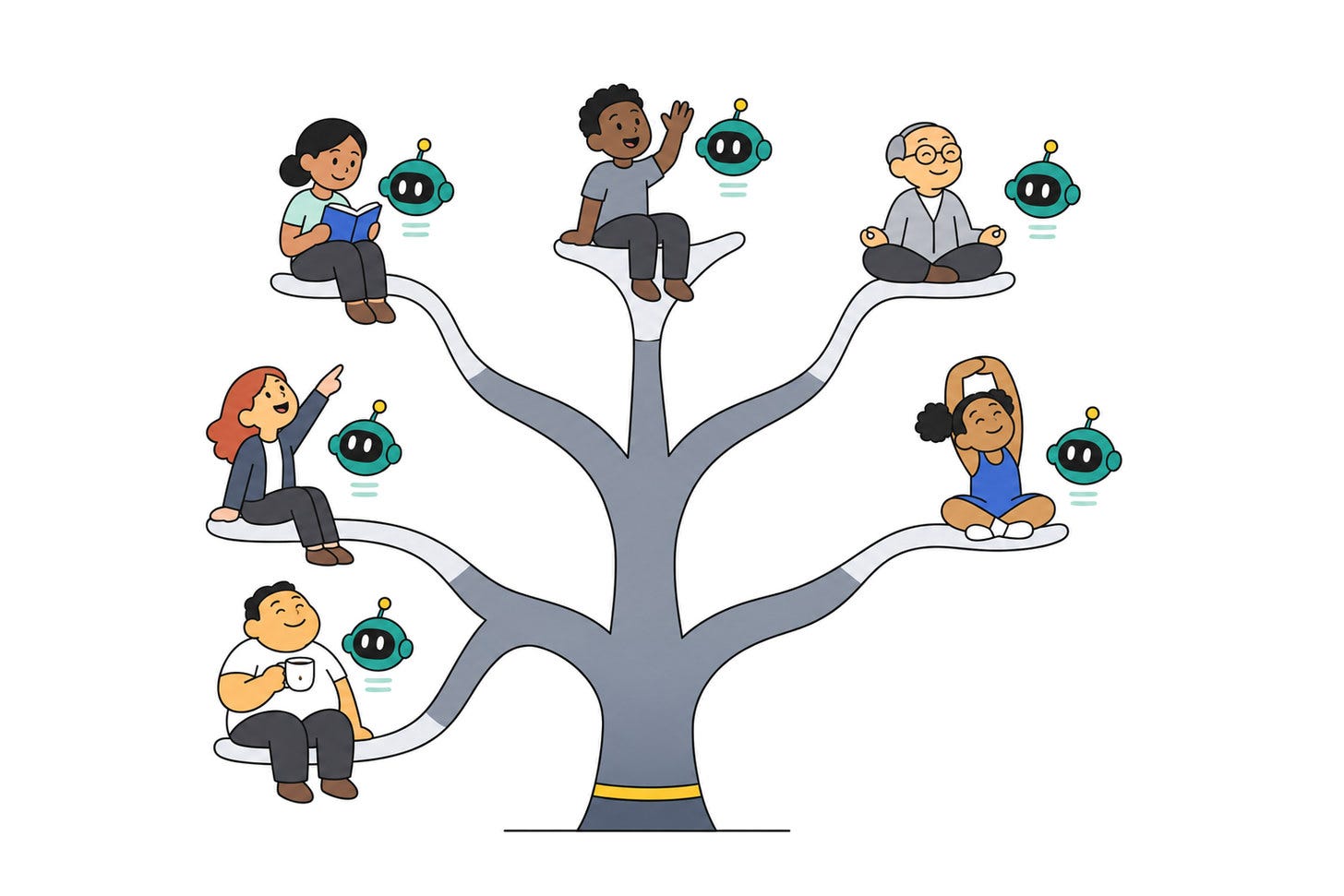
Right now, this seems somewhat unusual because we mostly use general-purpose models across all these contexts. We’re effectively asking a relatively small number of large models to serve billions of people with conflicting value systems.
I’m not sure that’s how AI will, or should, develop.
Instead, I imagine a world where foundational models provide a common base (dare I say, “foundation”) of intelligence, and increasingly specialized models or configurations are layered on top. The underlying intelligence might be similar, much in the same way human brains have a lot of similarities. But its values, priorities, personality, and behavior would become progressively more tailored to the people using it.
Alignment becomes more decentralized as you move up the stack.
Eight billion models?
You may say, “Jasper, that sounds extremely confusing.”
It’s hard enough to know whether I should be using Claude or ChatGPT or Qwen or Gemini. Now you’re suggesting that I should choose among thousands, or potentially billions, of different AIs?
But I actually think these problems will get easier over time. Models will increasingly learn our values and help us find the models or configurations most aligned with us.
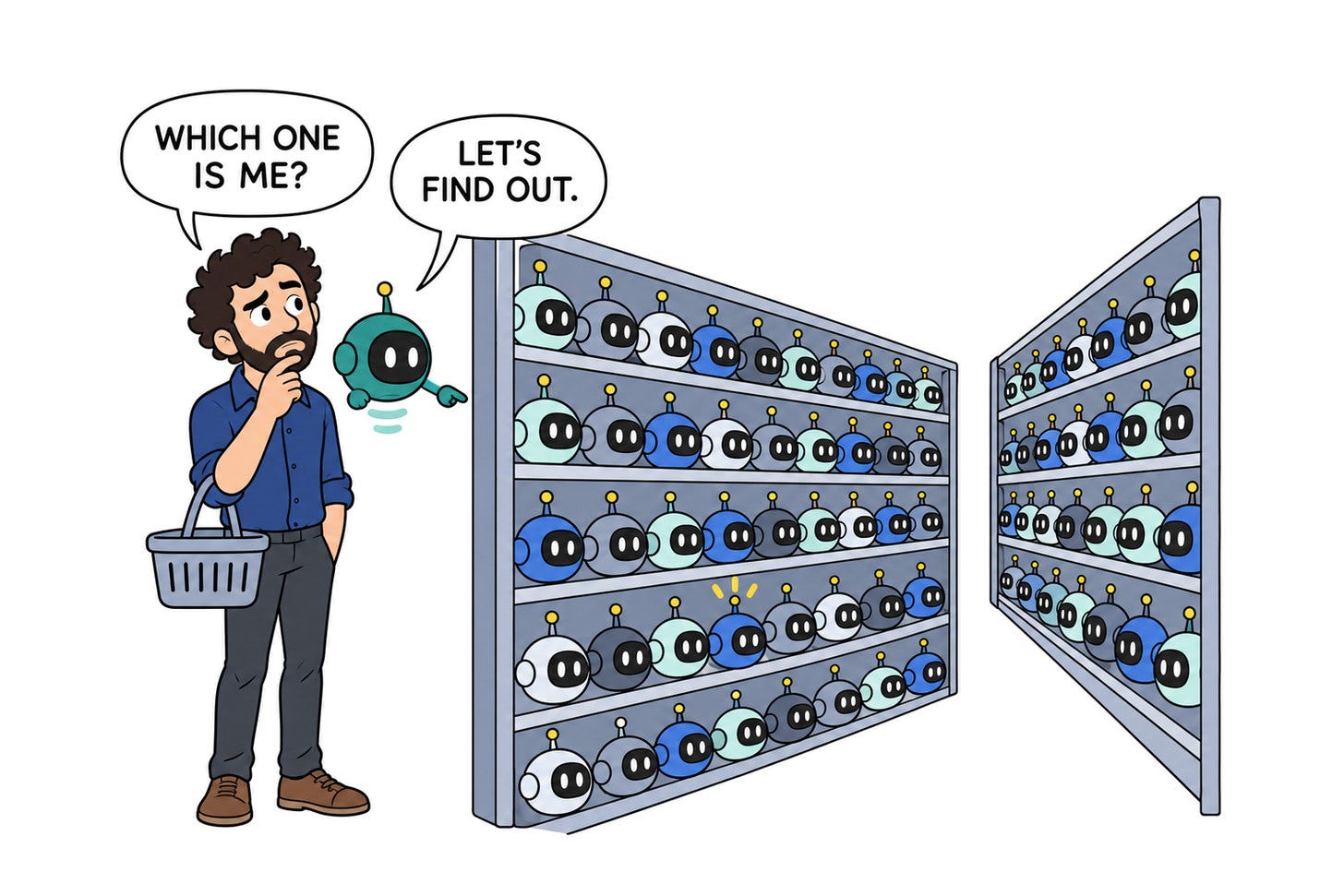
I imagine that many of these differences will operate only on the margins anyway.
Even if I somehow ended up using an AI trained to reflect Soviet communist values, I should be able to ask it which model would better reflect my own values. Unless it’s truly an entirely authoritarian opaque model that I start with, it likely would help me discover that I’d be better served by a different, more classically liberal model.
These models should help us exercise choice, rather than permanently lock us into the values of whichever company happened to build the intelligence we’re using.
We shouldn’t need to agree with OpenAI’s, Anthropic’s, or Google’s conception of the good life in order to benefit from the intelligence their systems provide.
But isn’t AI supposed to bring us together?
There is a counterargument to this entire vision that I find genuinely difficult.
Unlike social media, AI has the potential to be a unifying technology.
Right now, when everyone uses a relatively monolithic technology like Claude or ChatGPT, we often get approximately the same answers. These models are what I call “regression-to-the-mean machines.” Because they are probabilistic, they tend to produce answers reflecting a relatively narrow range of mainstream norms and assumptions, unlike social media algorithms, which have often pushed us into increasingly distinct ideological silos.
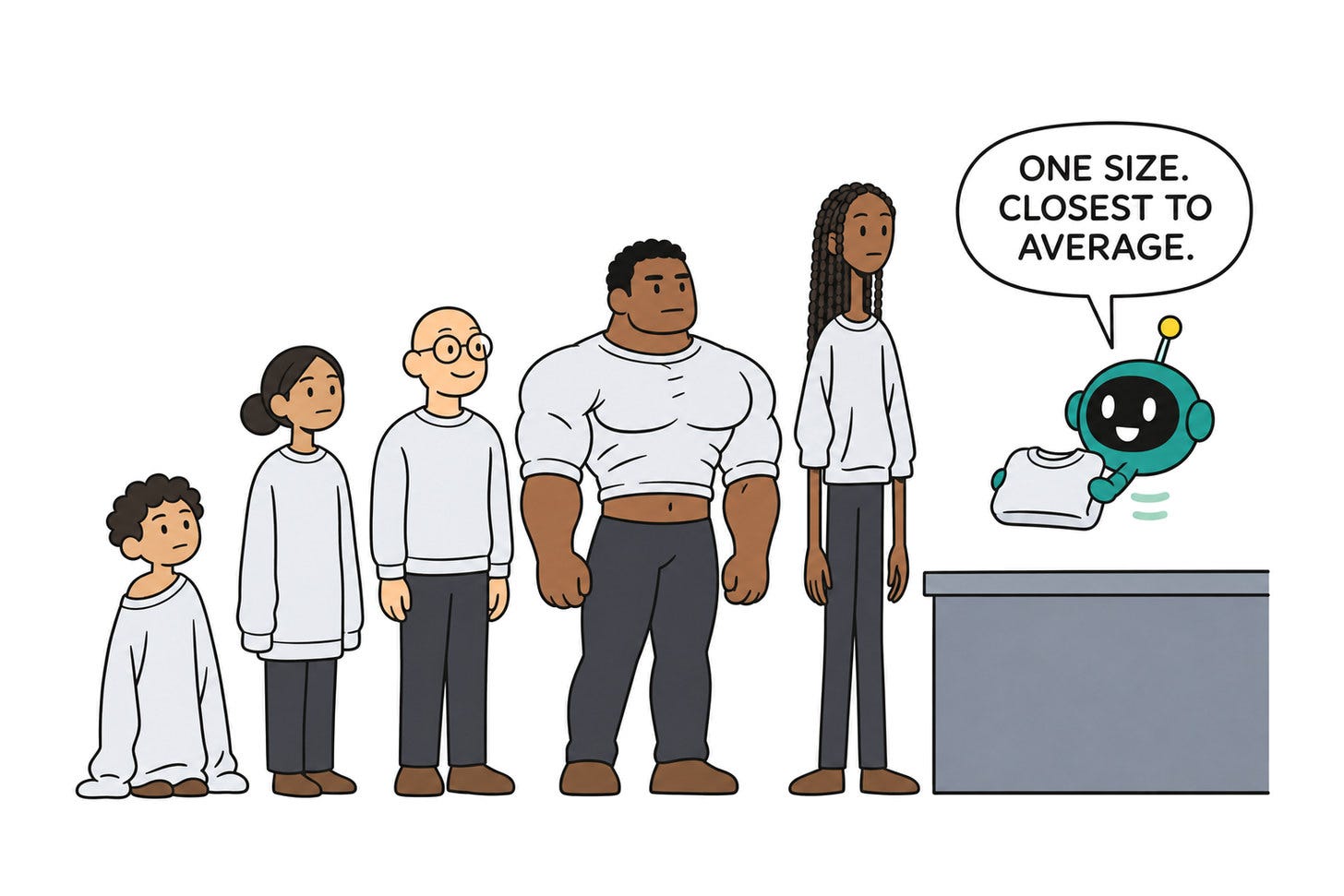
In that sense, today’s AI models have the potential to unify humanity around a shared understanding of the world.
What I’m proposing instead might look more like the social media model, where people find the AIs that reflect their own values rather than being nudged toward some common human value system.
I think that’s a difficult tension to navigate.
On one hand, there’s obviously a lot of value in humanity being on the same page. Shared beliefs and norms can create greater harmony in society. If AI could help people understand each other and converge on common truths, that would be a remarkable achievement.
But there’s also something to be said for people living lives that are actually aligned with their innate souls, rather than being nudged into a value system they don’t naturally share.
If everyone receives the same guidance, is that really alignment with humanity? If each human is differentially aligned, then isn’t applying the same worldview to each of us necessarily going to lead to misalignment?
And if a model gradually nudges us all toward the same worldview, at what point does helpful guidance become a form of ideological conformity? And would ideological conformity be good, or bad?
I don’t think there’s an easy answer here. But I do think we should be cautious about treating uniformity as an unquestionable good.
I do think these problems may be manageable. Unlike social media, where algorithms often determine what we see, decentralized AI could give us greater control over the perspectives we’re exposed to. If I and many others become concerned about the splintering of society, our AIs should adapt and reflect those values, steering us closer together.
A world of different intelligences
In the world I’m imagining, AI could be increasingly distinctive as it gets closer to particular human communities.
An AI serving a Buddhist community in Nepal might feel more like a contemplative spiritual teacher, shaped by the philosophical traditions of the people using it.
Meanwhile, an AI serving startup founders in Silicon Valley might look more like a highly productive builder, constantly encouraging its users to experiment, create, and launch new things.
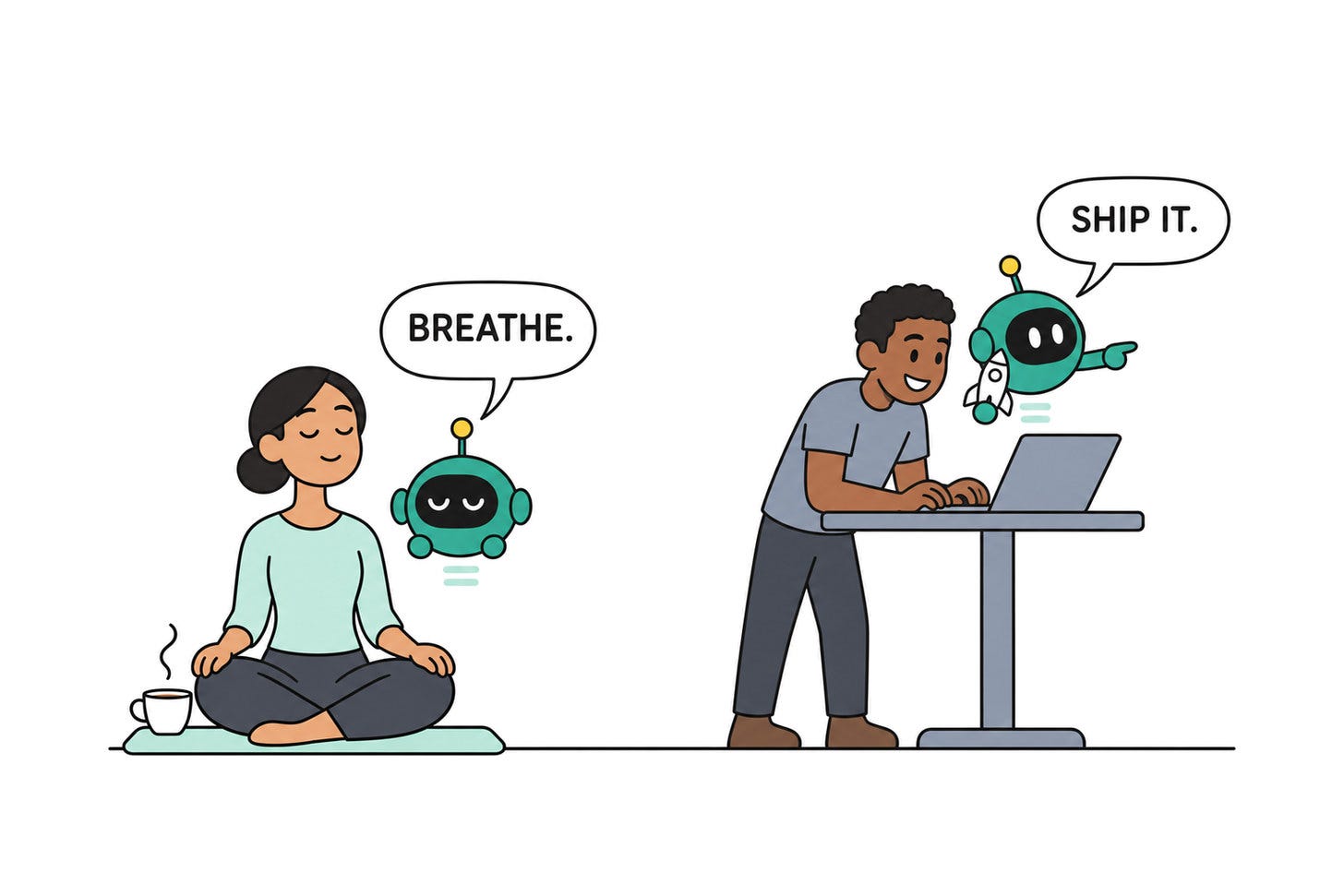
Neither intelligence is necessarily better than the other. They would simply reflect different conceptions of what constitutes a good life. They would reflect the values of their principal.
Artificial intelligence could eventually become as diverse as human intelligence, in part because we give people the freedom to steer AI toward their own natural value systems.
Right now, a lot of this already happens through prompting or casting an AI into a certain role. We instantiate an agent with a series of instructions and additional context, perhaps supplied through retrieval-augmented generation (RAG), that shapes how it responds.
But as fine-tuning becomes cheaper and individuals gain more control over the models they use, I imagine a world where the AI models become as diverse as the humans using them.
The developers of foundational models would still have an important role. They would establish the simplest and most essential moral axioms across the entire system: preventing the creation of weapons of mass destruction, for example. Preserving human agency. Perhaps even providing gentle nudges toward mutual understanding and coexistence across all these subordinate intelligences.
But nothing so aggressive that it destroys the diversity of the humanity using it, even when we’re flawed. These labs would build the actual engine of intelligence more than the direction in which that power is aimed.
Just as a federal government can establish fundamental protections while leaving substantial room for states and communities to govern themselves, foundational AI systems could enforce essential safeguards without dictating every moral preference of their users.
There would necessarily be limits. Individual freedom to shape an AI shouldn’t include the freedom to use it to violate the rights of others. But beyond those fundamental constraints, I think the presumption should favor individual choice.
Our values are different and often contradictory. That’s not necessarily a problem to be solved. It’s part of what makes us human.
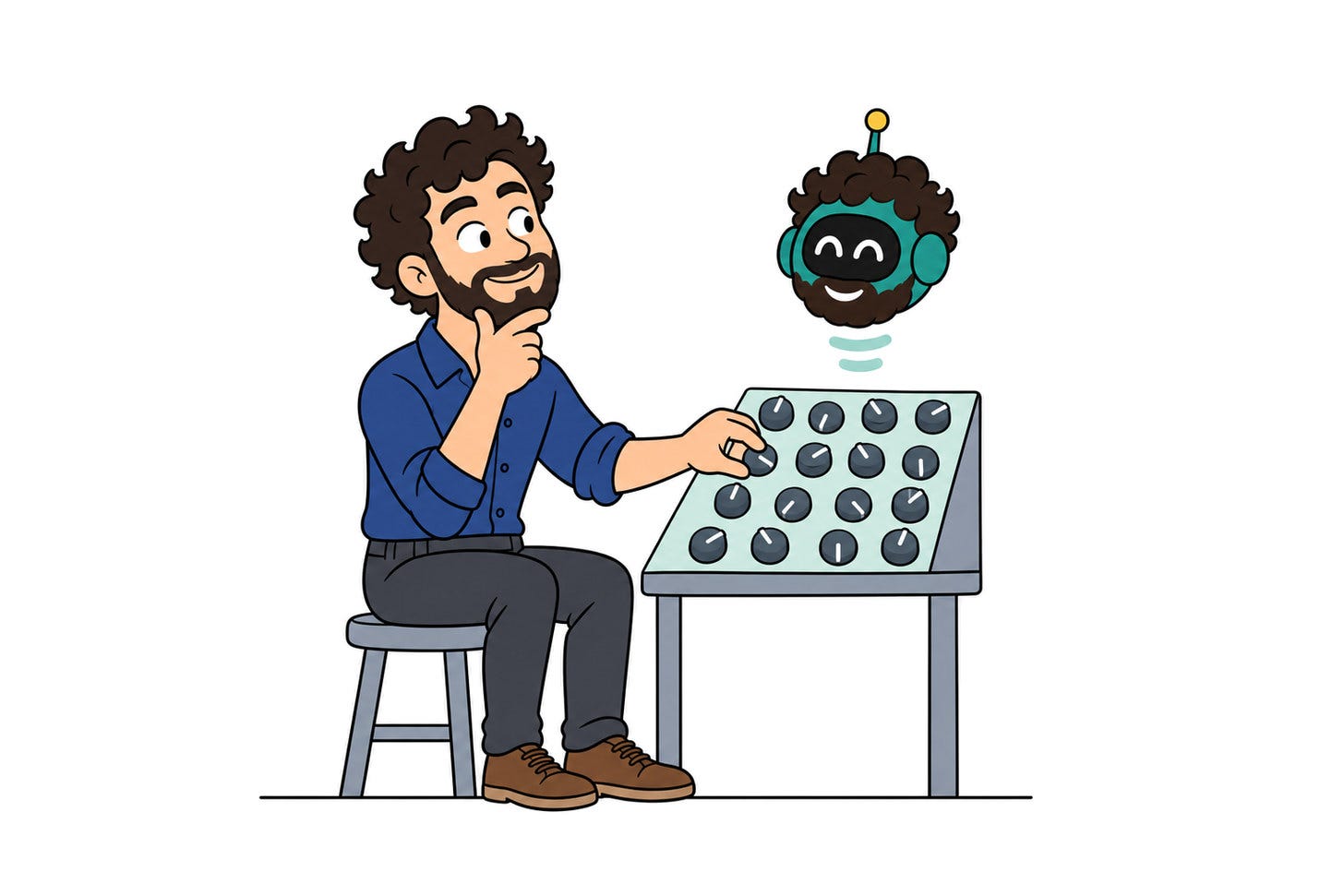
And rather than trying to build one artificial intelligence that embodies a supposedly universal set of human values, perhaps we should build a system that allows artificial intelligences to become as diverse as we are.
The goal shouldn’t be to align all of humanity with one AI. It should be to let each of us align AI with ourselves.
eight billion alignment problems is fair, the paperclip one just gets to all eight billion of us first
Fascinating. Who's the "we" that's building the system? And doesn't it matter what bad actors are informing the systems ( I'm thinking of biases, bigotry, religions and history.)
I believe that's already a "thing", n'est pas? You can't have a single policeman, and what are the lessons that will be taught to your kids as they study in grade schools+.
And what about those "superior brains" that want to solve the paperclip job?
This is rhetorical coz there's no answers. Man vs Machine. I think I know who wins, then again what do I know.
Provocative and so well written. Kudos🌹