


In my last article, we discussed how important reputation credentialing for AI agents may become in an agentic internet. In this article, we explore the philosophy behind credentialing writ large: what makes a good credential?
Rather than focus on credentialing AI agents, we’ll examine the problem by anchoring on the most important and expensive credentials to most people: their professional credentials.
(P.S.: No shade thrown, my fancy diplomas are bad credentials too.)
Imagine three applicants for a sales job. Two have business degrees, and the third never enrolled. She learned from books, podcasts, and two summers selling door to door, and strangers trust her within a minute. She can close a deal better than either graduate. Yet, on paper, she is the weakest of the three.
Learning something and persuading an employer that you know it are different problems.
A college degree bundles those problems together. The institution provides an education and issues the credential that helps make that education legible to employers. For someone who needs the credential, buying the education can feel compulsory, even when another route would better fit their circumstances.
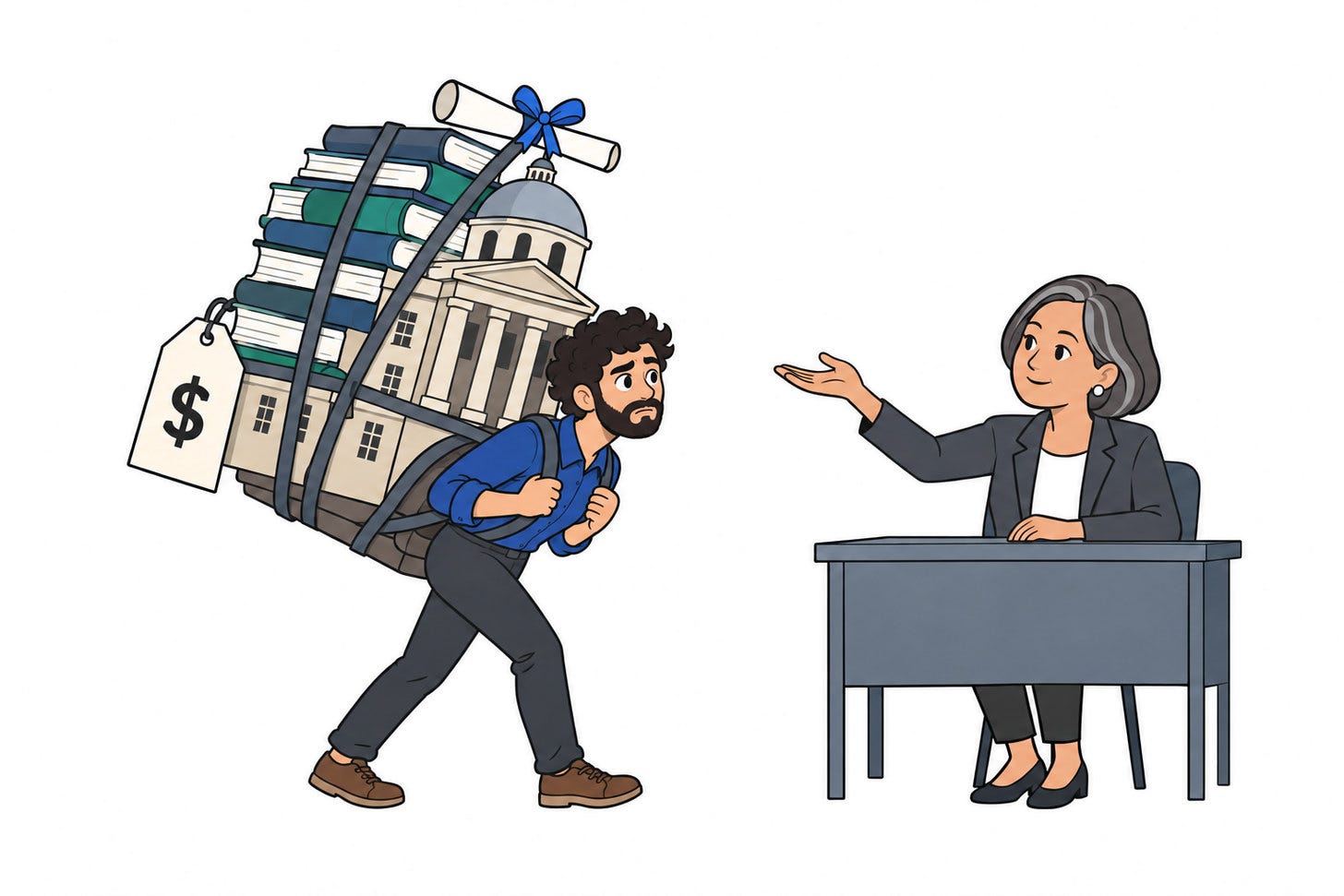
To be clear, I’m a fan of school: I’ve been through college, flight school, culinary school, and now both business school and law school. Each of those programs taught me something I value. I’ve also taught myself a dozen things, some of them more deeply than what I learned in school, and few of them have any way onto my résumé. Formal education should be a choice rather than a requirement.
The problem will grow as AI makes it easier to teach yourself almost anything: the age of the autodidact is close at hand. More people will learn outside school, and employers (currently) have few ways to see what they know.
True, colleges do not hold a literal monopoly on credentials. Professional certifications already offer other ways to demonstrate knowledge and skill, and some employers test applicants themselves. But employers’ tests often come late, after a résumé screen that may already have filtered by degree, and many professional certifications are not considered seriously. The degree remains a powerful gatekeeper.
I believe education should be separated from credentialing. This could give individuals more freedom to learn through apprenticeships, independent study, bootcamps, work, or college. Employers could evaluate a wider pool of applicants using evidence they understand and trust. The challenge is building credentials that deserve that trust.
One field already does this well: aviation. Before we see how, we need to understand the five dimensions of a good credential.
So, what makes a good credential?
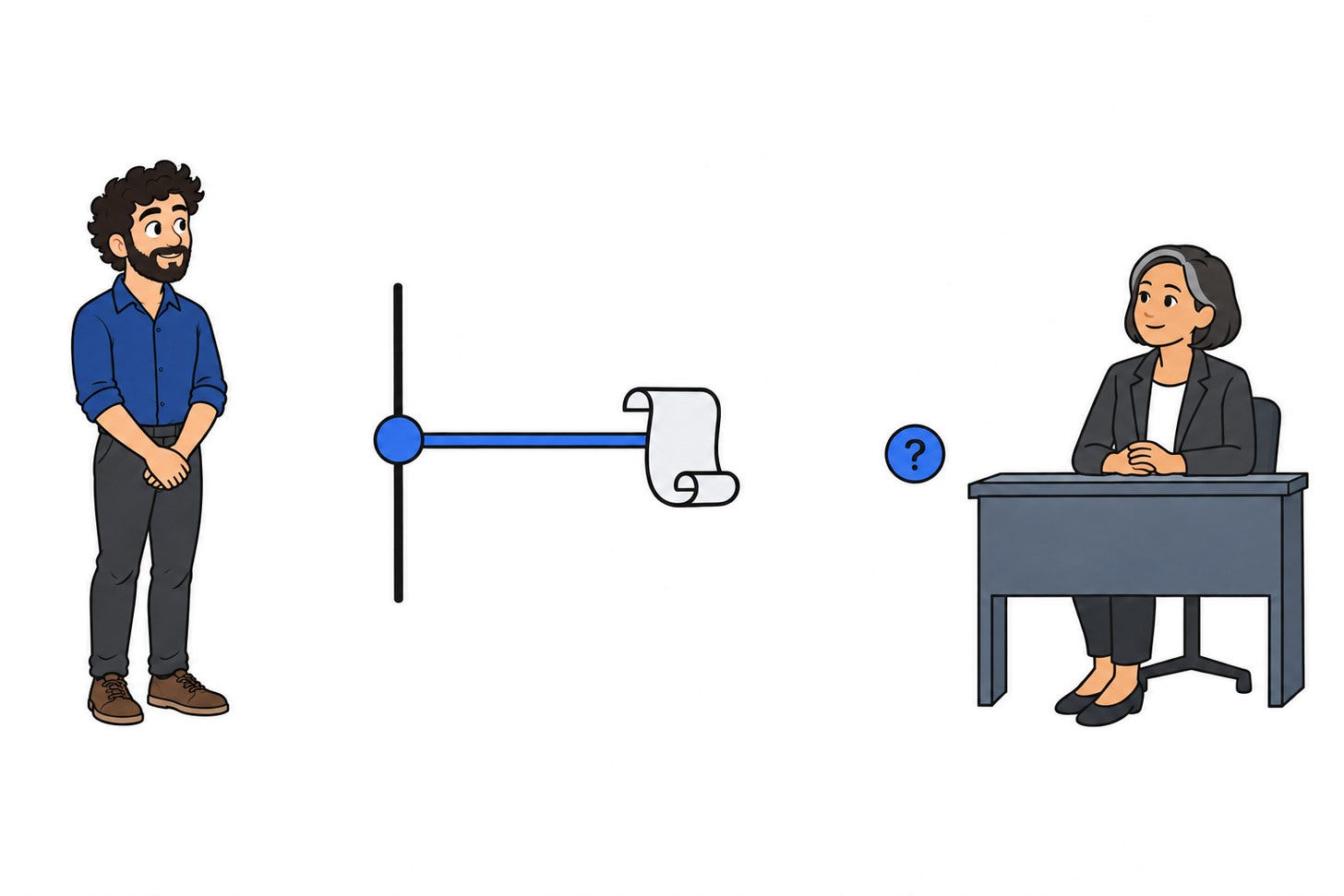
Employers face an information gap between an applicant’s apparent ability and actual ability. A useful credential helps close that gap. It gives an employer a reason to believe that someone can do what they claim.
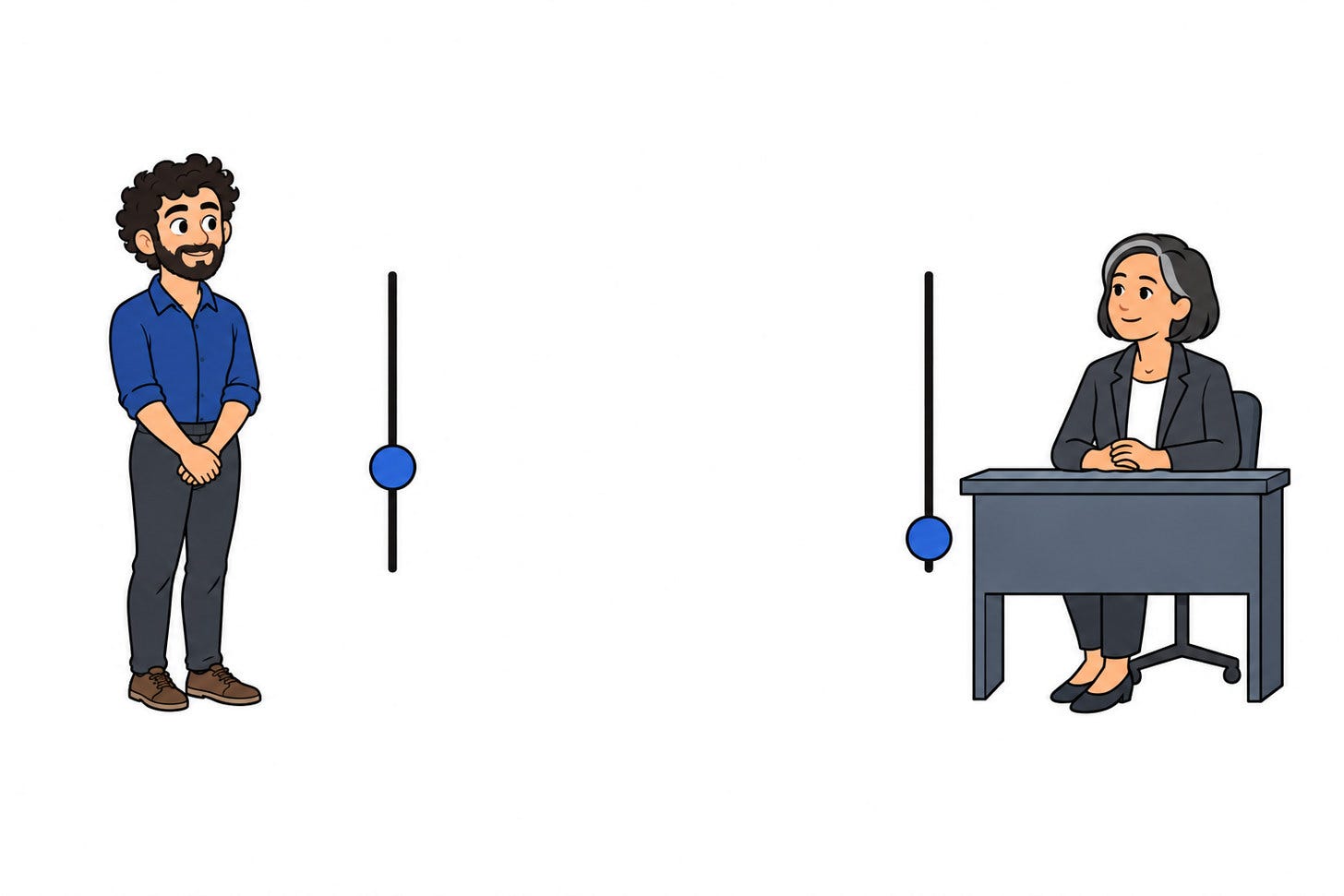
That matters to applicants, too. Someone who has learned a skill but cannot demonstrate it may be passed over for someone whose qualifications are easier to interpret. Better credentials could make overlooked ability visible.
I believe credentialing sources should be measured on the following five dimensions:
trustworthy issuers,
comparable results,
granular detail,
ability tracked over time, and
independence from where someone learned.
Why these five? Start with the employer’s problem: she has to choose, on someone else’s word, among strangers, for a particular job, as they are today, from everyone who could do it.
Each of those phrases requires something. Acting on someone else’s word requires (1) an issuer she can trust. Choosing among strangers requires (2) results she can compare. Filling a particular job requires (3) detail about particular abilities. Hiring people as they are today requires (4) credentials that stay current. And finding everyone who could do it requires (5) an assessment open to anyone, wherever they learned.
1. Credentialing organizations must be trustworthy
A credential needs two things from its issuer. It must measure abilities that predict how someone will perform, and employers must believe that it does. The first makes an issuer trustworthy; the second makes it trusted. Even an accurate assessment is useless to an applicant if the people making hiring decisions have no reason to believe it.
Universities draw on institutional reputations, built in part on how selective they are. An independent credentialing organization would need to build a reputation for measuring ability reliably. Its standing should rest on what the people it certifies can do, not on how many people it turns away.
This distinction matters. A credible examiner could assess anyone willing to demonstrate their ability. It would not need to restrict access to a small entering class or require years of attendance before allowing someone to be evaluated.
Trust would still have to be earned. Separating assessment from instruction does not, by itself, make an assessment good.
Who runs the examination matters too. If applicants choose and pay the examiner while employers pay nothing, examiners compete for applicants, and the easiest grader wins. One answer is to give the people who rely on the result a hand in running it. In Germany, the boards that examine apprentices must include employer and worker representatives in equal numbers, plus at least one vocational school teacher.
2. Credentials should be comparable
Employers must be able to compare credentials if they are to compare applicants. A credential that requires extensive investigation before it means anything has limited practical value.
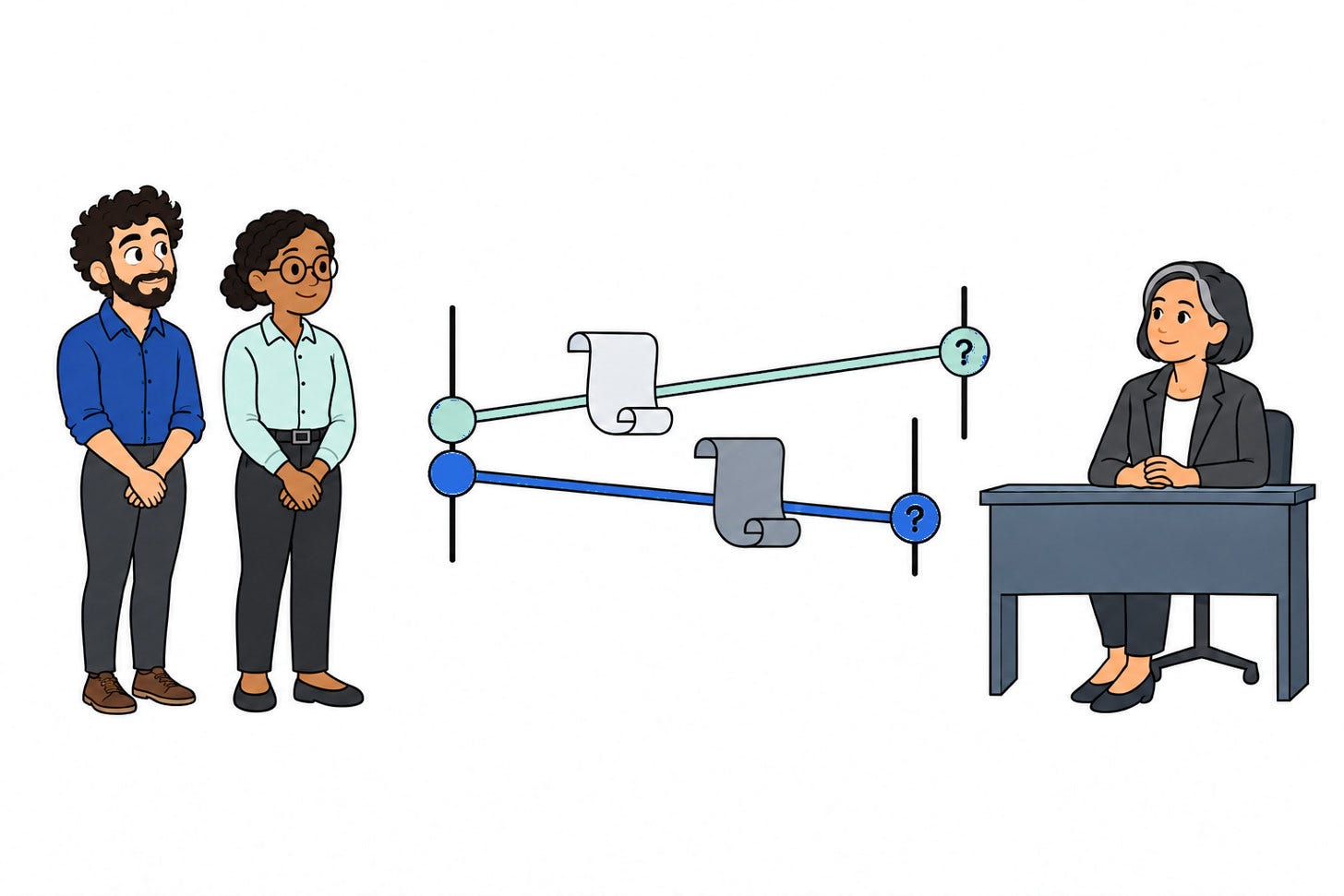
An alternative system should make its standards clear. What was assessed? How difficult was the assessment? What can someone with this result reasonably be expected to do?
The original problem would persist if every educational provider simply issued its own opaque badge. A useful system would allow employers to interpret results across providers, whether through shared standards, recognizable assessments, or evidence of comparable performance.
There need not be one universal examiner. Competition among credible institutions could improve methods, as long as they compete for employers’ trust rather than applicants’ fees. But a larger supply of credentials is useful only if it produces information employers can understand and compare.
3. Credentials should be granular in depth and breadth
Right now, university degrees group achievement into broad categories: associate’s, bachelor’s, master’s, and doctorate, divided by field. These categories tell an employer something, but leave much unspecified. Transcripts add detail, but a course title does not say what was assessed or how hard it was, and a grade does not carry across schools.
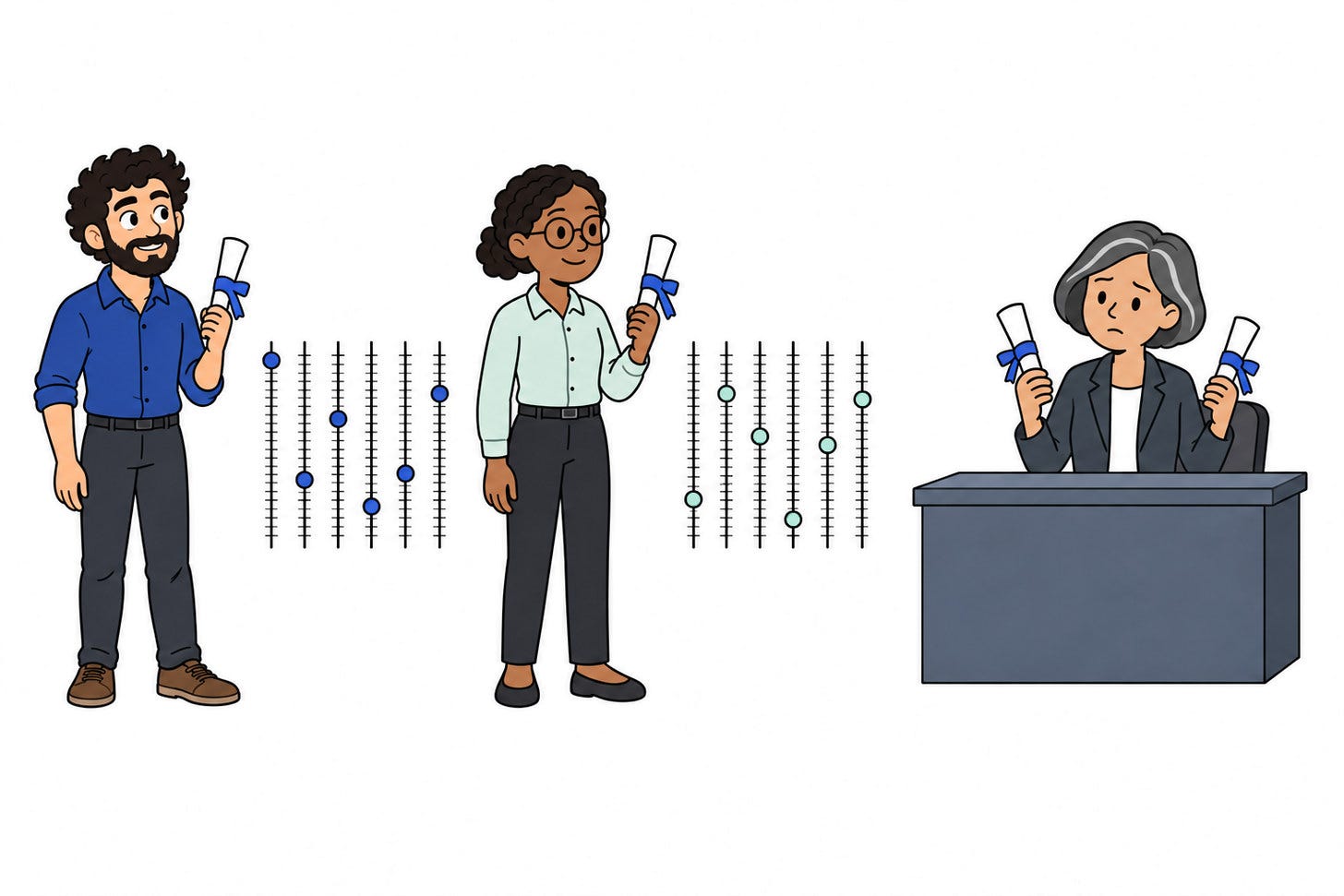
Two people with computer science degrees may have very different abilities in programming, machine learning, computer vision, cryptography, algorithms, and more. A single degree title conceals those differences.
Granularity runs in two directions. Breadth means naming many specific skills instead of one field. Depth means rating each skill on a fine scale, finer than four degree levels.
A better, granular system could assess particular skills at different levels (e.g., John scores in the 98th percentile at systems architecture and the 42nd at timely communication, against everyone who has taken the same assessment). Rather than treating a degree as a complete description of someone’s preparation, it could show where an applicant is capable, where they are exceptional, and where they still need instruction.
4. Credentials should reflect ability over time
A degree records an achievement at a particular point in someone’s life. It does not automatically describe what that person knows decades later.
Take my own computer science degree. I haven’t written Python in ten years, and when I need software now, I vibecode it: I describe what I want in plain English, and an AI writes it. Is my degree worth anything? Some of it is. I can still think in algorithms, and I still know how to architect a system into parts that fit together. But none of that is captured in my diploma—it both records too much (over-representing how proficient a traditional computer scientist I am, having forgotten much of my education) and too little (under-representing vibecoding and engineering skills I’ve learned since then).
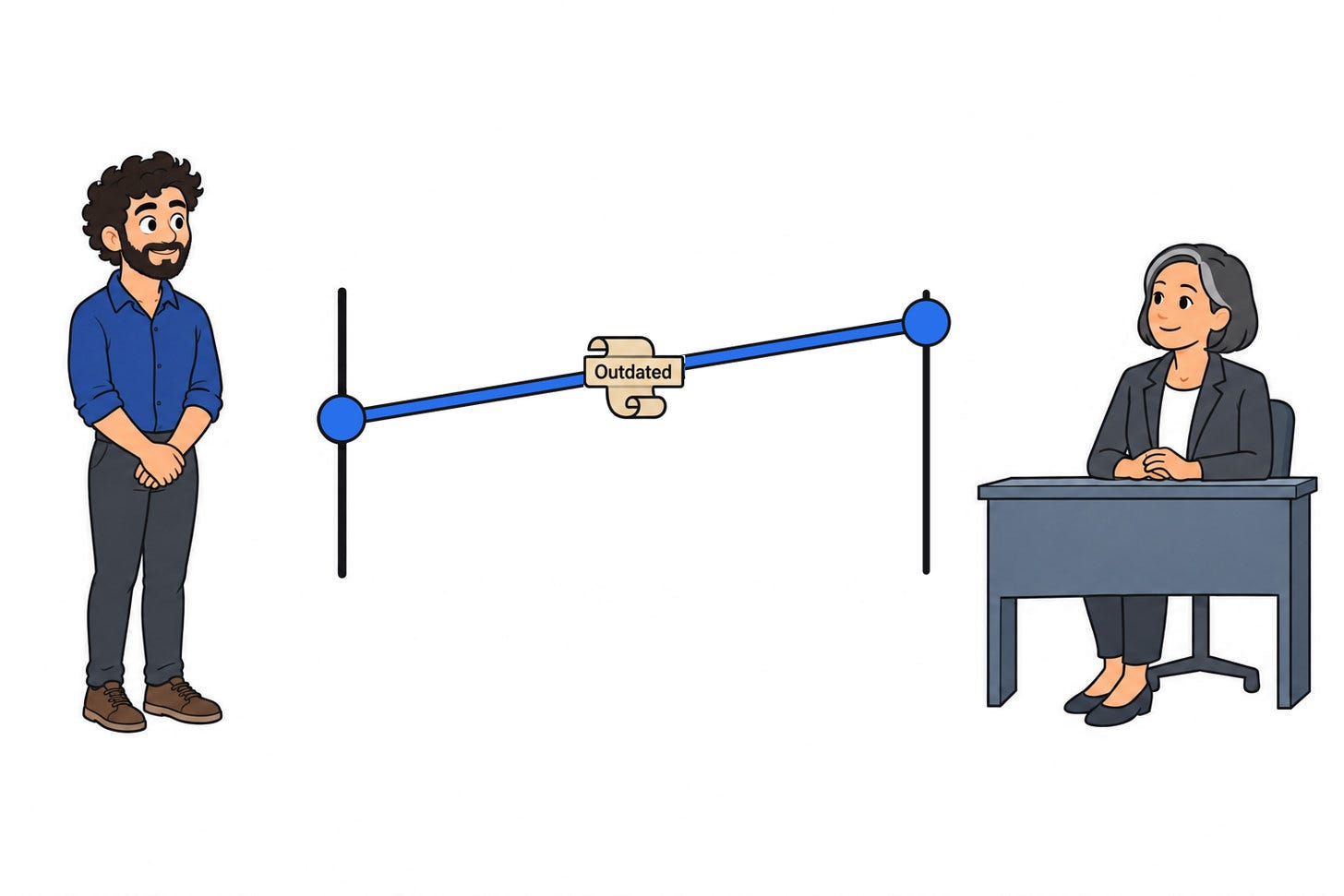
People continue learning at work. They also forget things, and their fields change. A credentialing system should account for both the individual’s development and changes in the knowledge being assessed.
Renewal assessments, continuing education, work samples, and reviews of professional performance offer possible approaches. Different fields may require different methods. The useful question is what evidence gives an employer a reasonable picture of someone’s current ability.
An old credential should not erase subsequent experience. Nor should it substitute indefinitely for evidence that someone can still do the work.
5. Credentialing should be independent of where someone learned
College, apprenticeships, independent study, and work can all develop knowledge and skill. If two people can demonstrate the same relevant ability, their access to a credential should not depend on having followed the same educational path.
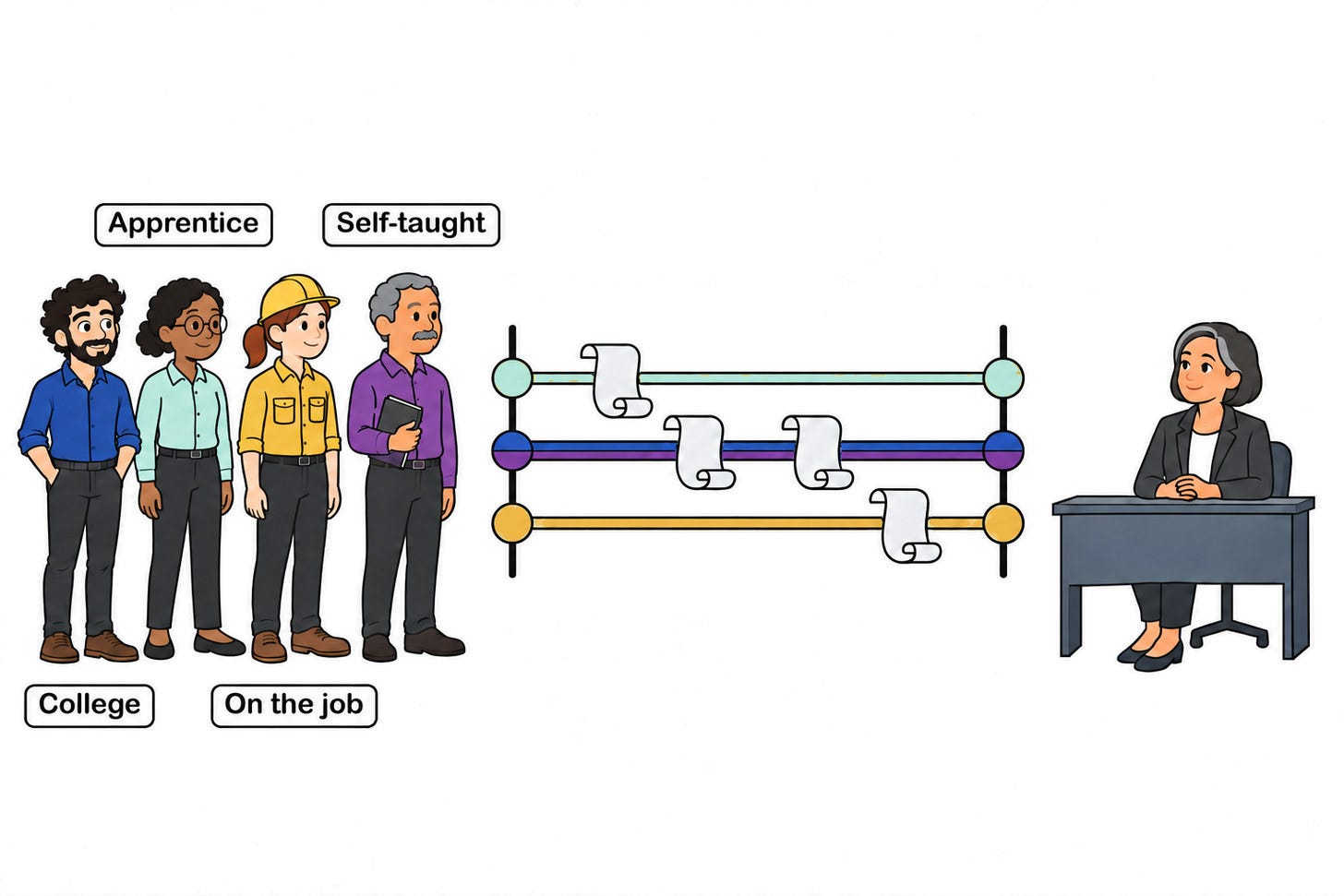
Consider a Navy technician who spent two decades maintaining radar systems and now wants a civilian engineering job. That history of experience should not automatically convert to a degree or prove mastery. But the technician should have a way to demonstrate what they know without first repeating an education they may already possess.
This is the central benefit of separating education from credentialing. The assessment can ask what someone is able to do, while leaving them greater freedom to decide how to learn it.
Can an assessment do the work of a degree?
None of this requires imagining that a single afternoon of multiple-choice questions can measure every useful ability. Assessments could include written work, oral examinations, lab practicals, projects, and observed performance. Some might take days or weeks. Others might evaluate work across a longer period.
The right method depends on the ability. A system meant to recognize practical competence has to watch people perform; it cannot succeed by measuring only preparation for a test. AI makes this even more salient: the tools that make it easy to teach yourself also make take-home work easy to fake.
But AI might also make evaluation of work, especially work which creates observable data, viable to credential on a continuous basis.
Aviation certifies pilots by watching them perform. A student can train at a university, at a flight school, or with an independent instructor, and almost every route ends at a practical test held to one national standard: an examiner questions the applicant on the ground, then watches them fly.
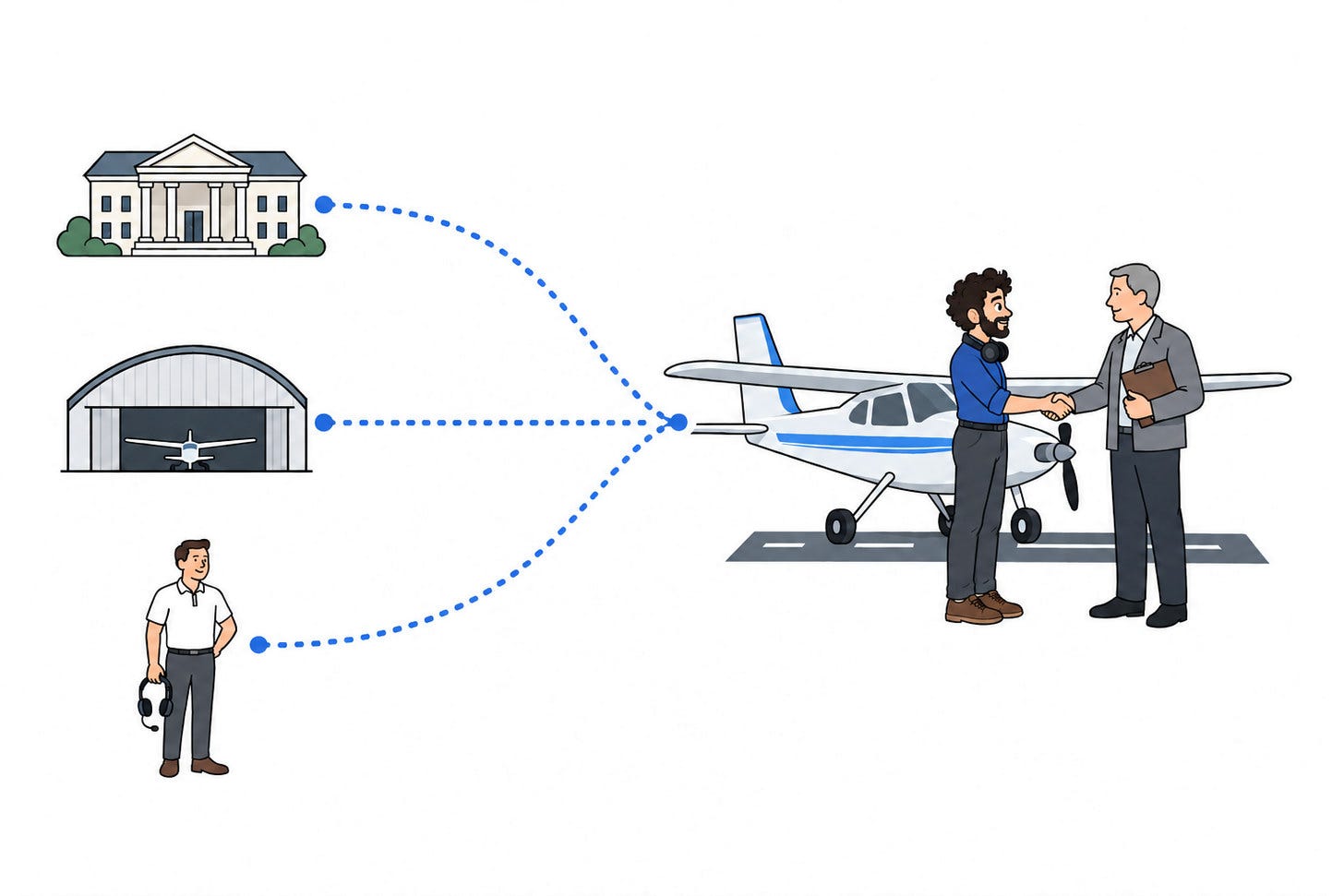
Pilot certification does well in all five dimensions.
It is trustworthy, at least as far as you trust the FAA. Many of its examiners are not FAA employees but private designees, and while the applicant pays them (a conflict I warned about above), the FAA writes the standard, oversees the examiners, and often removes those who do the job badly.
It is comparable: one agency holds every pilot to the same published standard, so a private pilot from Alaska has the same certificate as one from Florida.
It is granular, especially in breadth. Certificates climb from private to commercial to airline transport pilot, and dozens of ratings and endorsements separate single-engine from multiengine, land from sea, visual from instrument flying, and tailwheel, complex, and high-performance airplanes from the rest.
It stays current, if loosely: to keep acting as pilot in command, a pilot must complete a flight review with an instructor every two years.
And, apart from narrow exceptions (such as for military pilots, whose training is even more rigorous), it is the same standard regardless of how the pilot trained.
Perhaps because public safety raised the stakes, aviation evolved toward a proper credentialing system early. It also had one agency to set the standard, with the law behind it. Most fields have neither, so their standards would have to come from employers, professional bodies, and examiners willing to publish theirs.
Would we lose something by separating credentialing from education?
College also provides more than instruction and credentials. Students form friendships, meet collaborators, develop judgment, and learn to live independently. Those are good reasons to attend college.
Yet, they are poor reasons to require it. A credible alternative to the degree would leave people free to choose college for those benefits, while giving others a different route to demonstrate their abilities.
A degree also tells employers something a skills test does not: that someone could finish four years of work set by others. An employer who wants that signal can still ask for the degree. But a long project or a steady work record shows persistence too.
Separating the two functions could also change the economics of continued learning. Someone who needs one skill might take a single course, practice at work, and seek an assessment when ready. They would not have to enroll in a full degree program for that learning to become visible to an employer. Assessments cost money too, but the bill would come skill-by-skill, when someone is ready, not as years of tuition paid up front.
This would not make every class worthwhile or guarantee a better job. It could, however, make education easier to pursue in increments: learn, work, demonstrate progress, and learn again.
How would it start?
The hardest problem is adoption. Applicants need credentials employers recognize, and employers need evidence that those credentials predict useful performance. A new system would have to earn acceptance in particular fields before it could become a broadly useful alternative. It faces a cold-start problem.
Maybe it could grow alongside universities. Colleges might offer independent assessments to people they have not taught. Professional organizations and other examiners might expand their existing work. Employers could help define the abilities worth measuring and evaluate whether the results improve hiring.
The goal is to give people more ways to prove what they know. Someone who can do the work should have a credible way to demonstrate it, wherever they learned.
Founders, request for startup: build a new credentialing system.
For more, check out the previous tech essay!
AI Agents Could Break the World's Biggest Marketplace Moats

Suppose I want to rent a house in Santa Cruz for a long weekend with seven friends. I open Airbnb because that is where the houses are. The owners list there because that is where people like me look.
Credentials establish a baseline. I’m a licensed architect, which means I’ve met the profession’s requirements to practice. It doesn’t tell a prospective client how good my judgment is, how well I communicate, or whether I’ll deliver on my commitments. Two architects—or doctors or attorneys—can have similar credentials and offer very different experiences.
Your sales example makes sense. Someone who learned through experience deserves a way to demonstrate her ability without buying a degree. But being excellent at closing a sale doesn’t necessarily make her an excellent employee. She might be difficult to work with, neglect follow-up, or make promises her colleagues have to fulfill. Closing the deal is only part of the job.
You acknowledge the need for current assessments and observed performance. My question is how much of the full working relationship even a detailed credential can capture. Reliability, judgment, and collaboration often become clear only through working together over time. That’s part of what makes probationary periods useful.
Past performance is useful evidence, but it doesn't guarantee future results. People’s circumstances change, and someone who thrived in one organization may struggle in another.
I agree with creating more ways for people to demonstrate what they know. I’d just distinguish between demonstrating specific abilities and establishing how someone will perform in the whole job. Better credentials can reduce that uncertainty, but working together is still part of the assessment.